Monday, September 29, 2008

Important Information On What Is Considered The Best Treatment For Prostate Cancer

Important Information On What Is Considered The Best Treatment For Prostate Cancer
By Tim Gorman

Have you recently been diagnosed with prostate cancer? If so, you need to sit down and discuss all the possible treatment options with your doctor. Some treatments may not be appropriate for you, so it's important to determine which options are most suitable. There are a number of factors that need to be considered when determining which type of treatment is likely to be the most effective. It's often quite difficult to determine which treatment is most appropriate, as it depends how much you give to each factor. Some men also find it difficult to cope with the idea of living with the side effects of certain treatments, such as baldness, impotence or urine incontinence.

Initially, you need to consider basic factors such as your age, overall level of health, your goals for treatment, and how you feel about possible treatment side effects. These should be discussed extensively with your doctor and partner. If something is really bothering you, it's important to share that with your doctor. You have a right to be fully informed about all your options. Addressing your concerns and trying to find a treatment that is effective but still acceptable to you is part of the duties and obligations of your doctor. If you don't care about side effects and you just want to get rid of the cancer, fine. But if your concerns are substantial, even to the point of being more important than curing the cancer, then you need to share those concerns upfront.

It's also important to think about your age. If you're already in your 70's and your health is poor, it may not be the preferred choice to follow an aggressive treatment regime. Prostate cancer is a relatively slow growing cancer, and it can take years before it spreads into other parts of your body. If cancer is left alone, and not operated on, it's often found that it grows even slower. So you could use this to your advantage. Instead of risking your life by undergoing surgery, it may be a better choice to undertake hormone therapy. This is unlikely to get rid of the cancer, but it can retard its growth to a great extent. The advantage of hormone therapy over other more invasive treatments is that it also has very few uncomfortable side effects.

If you're only in your 50's or 60's, or even if you're older but in good health, then you might be more interested in the treatments that offer the best chance of a cure. These can include things such as radical prostatectomy, external radiation and radioactive treatment, as these are generally considered the most effective methods for eradicating prostate cancer cells. However the side effects of these treatments can be serious, ranging from urine incontinence to impotency. This is why it can be very important for you to consider all factors before choosing which treatment option you want to pursue. There's no need to make an instant decision, you should take the time to discuss treatment with your family and partner. Whatever decision you make, the support of your family and friends is very important.

For even more important and essential information on prostate cancer treatments, prostate cancer diagnostic testing, and prostate cancer symptoms please visit the OnlineProstateHealthGuide.com

Article Source: http://EzineArticles.com/?expert=TimGorman
http://EzineArticles.com/?Important-Information-On-What-Is-Considered-The-Best-Treatment-For-Prostate-Cancer&id=314787

Thursday, September 25, 2008

Get The Facts About Prostate Cancer

Get The Facts About Prostate Cancer
By Helen Hecker

Detected in its early stages, prostate cancer can be effectively treated and cured. In most men, prostate cancer grows very slowly; most men will never know they have the condition. Prostate cancer is a malignant tumor of the prostate gland.

The main job of the prostate gland is to make seminal fluid, the milky substance that transports sperm. It's estimated that approximately 234,460 men in the U.S. will be diagnosed with prostate cancer this year, and approximately 27,350 will die of the disease. If you have prostate cancer, are concerned about getting it, or if you're looking out for the health of someone you love, this article can help.

One symptom is difficulty starting urination or holding back urine. One symptom is a need to urinate frequently, especially at night. Blood in the urine or semen and frequent pain or stiffness in the lower back, hips, or upper thighs are often symptoms of cancer.

Most symptoms, although associated with prostate cancer, are more likely to be connected to non-cancerous conditions. Because symptoms can mimic other diseases or disorders, men who experience any of these symptoms should undergo a thorough work-up to determine the underlying cause of the symptoms. Having one or more cancer symptoms does not necessarily mean that you have prostate cancer.

One downside to PSA testing is that health care providers are detecting and treating some very early-stage prostate cancers that may never have caused the patient any harm. A number of tests may be done to confirm a diagnosis. A PSA test with a high level can also be from a non-cancerous enlargement of the prostate gland.

A urinalysis may indicate if there is blood in the urine. Another test usually used when prostate cancer symptoms are present is the digital rectal exam (DRE) performed by the doctor. A chest x-ray may be done to see if there's a spread of cancer.

The conventional treatment of prostate cancer is often controversial. Surgery, radiation therapy, and hormonal therapy can interfere with libido on a temporary or permanent basis. Medications can have many side effects, including hot flashes and loss of sexual desire.

Be aware that some men choose natural treatment options and forgo any surgery, radiation or chemotherapy. Anyone considering surgery should be aware of the benefits, risks and the extent of the procedure. In patients whose health makes the risk of surgery unacceptably high, radiation therapy is often the chosen conventional alternative.

Surgery, called a radical prostatectomy, removes the entire prostate gland and some of the surrounding tissues. Surgery is usually only recommended after thorough evaluation and discussion of all available treatment options. Other medications used for hormonal therapy, with side effects, include androgen-blocking agents, which prevent testosterone from attaching to prostate cells.

Chemotherapy medications are often used to treat prostate cancers that are resistant to hormonal treatments. Whether radiation is as good as removing the prostate is debatable and the decision about which to choose, if any, can be difficult. Treatment options can vary based on the stage of the tumor.

If chemotherapy is decided upon after the first round of chemotherapy, most men receive further doses on an outpatient basis at a clinic or physician's office. Besides hormonal drugs, hormone manipulation may also be done by surgically removing the testes.

If you haven't been diagnosed but are concerned about symptoms you should call for an appointment to see your doctor; and if you're a man older than 50 who has never been screened for prostate cancer (by rectal exam and/or PSA level determination) or not had a regular annual exam, or have had a family history of prostate cancer, make an appointment soon. It's important to get as informed as possible and read all the newest books, ebooks and research available. Consider sites, such as this one, just a starting point where you can begin to learn about prostate cancer.

For more information on prostate cancer treatments and prostate cancer symptoms go to http://www.BestProstateHealthTips.com Helen Hecker R.N.'s website specializing in prostate and prostate cancer tips, advice and resources, including information on prostate tests and natural prostate cancer treatments

Article Source: http://EzineArticles.com/?expert=HelenHecker
http://EzineArticles.com/?Get-The-Facts-About-Prostate-Cancer&id=520959

A Prostate Cancer Diagnosis Can Save Your Life

A Prostate Cancer Diagnosis Can Save Your Life
By Abbie Frank

If you experience certain symptoms like frequent night urination, blood in your urine or semen, pains in your lower back, in your pelvis or in your upper thighs all this could be symptoms of prostatitis, a non cancerous swelling of the prostate gland or it could be prostate cancer.

Now there's no need to panic but the fact is that many who choose to ignore signs and symptoms condemn themselves to living with the uncertainty. This has to be worse than actually being diagnosed and knowing if you have prostate cancer or not.

For those who want to continue living, you need to undergo a prostate cancer diagnosis to determine if indeed you have prostate cancer and what can be done to cure it and save your life. There are several stages to prostate cancer and the farther along you let it go without treatment, the more at risk you are of dying due to cancer.

When you discover the symptoms you shouldn't just throw in the towel but try to see what you need to do about it. First, check with your doctor to conduct screening tests of prostate cancer for you. If you've followed previous advice, you no doubt have a baseline PSA test and previous physical tests to begin your diagnosis.

Yet another digital rectal examination (DRE) to check for size and texture of your prostate through the rectal lining but you should know the drill by now. Now's also not time to get sensitive concerning the test. With this examination your doctor can tell if cancer is present in your prostate by checking to see if he can feel a nodule or other types of prostate irregularity.

Next, the Prostate-Specific Antigen (PSA) blood test will be done and compared with previous results. This test is used to measure the levels of a protein in the blood called prostate-specific antigen. This protein is usually overproduced by prostate cancer cells. So, if prostate cancer is present, there will be an increase of PSA levels in the blood of the victim. Be aware that this isn't completely accurate though is a good indicator.

If after these screening tests cancer is suspected, a biopsy may be performed. Here, a biopsy is used to gain a tissue sample from the prostate to be examined under a microscope. This biopsy tissue analysis is performed to determine the Gleason score or if the tumor is cancerous or not.

At this point, you and your doctor have a good idea IF you have cancer and at what stage it has developed. It's at this point that a strategy for beating prostate cancer is development and options are discussed.

Be aware that in the great majority of cases, the symptoms are caused by prostatitis and are not cancerous. The point however is why anyone would want to stay in denial and think they have cancer instead of going in and getting an accurate diagnosis of the situation. Besides, there are mediations now available to treat prostatitis and help alleviate many of the most common symptomatic complaints

Abigail Franks has written many articles on the subject of prostate cancer. On her site you can find Prostate Cancer information and more about early detection with Prostate Cancer tests

Article Source: http://EzineArticles.com/?expert=AbbieFrank
http://EzineArticles.com/?A-Prostate-Cancer-Diagnosis-Can-Save-Your-Life&id=446253

Monday, September 22, 2008

A New Drug Can Extend The Life Of Some Men With Advanced Prostate Cancer

A New Drug Can Extend The Life Of Some Men With Advanced Prostate Cancer
By Donald Saunders

Although we are beginning, largely as a result of education, to detect more cases of prostate cancer in their early stages, unfortunately all too many cases are still not being detected until they are quite advanced.

Advanced prostate cancer refers to a cancer which has spread outside of the prostate gland itself and is divided into stage 3 cancer, in which the disease has spread into the pelvic tissue surrounding the prostate gland, and stage 4 cancer, in which the disease has spread, or metastasized, into other areas of the body, typically being carried by the lymphatic system.

Although not easy, stage 3 prostate cancer can often be treated quite effectively and it is possible to cure prostate cancer in stage 3. Once the disease has reached stage 4 however it becomes very difficult to cure and, while a cure is sometimes possible, treatment (typically the removal of the testes, to starve the cancer of testosterone, and chemotherapy) is generally aimed at managing the condition by slowing the progression of the disease and providing the patient with the best possible quality of life.

To this end, recent clinical trials have been examining the use of a drug called Pertuzumab and initial results suggest that this drug may well be effective in extending the life of many men suffering from advanced prostate cancer.

Amongst a small study group of men with advanced prostate cancer the use of Pertuzumab was shown to stabilize the disease for varying periods of time and, overall, extended the 12 month survival rate of the group as a whole to nearly 75%, which compared favorably to the expected survival rate without treatment of less than 50%.

Pertuzumab is a form of monoclonal antibody which is produced in a laboratory and is designed to seek out and bind with specific cells. In the case of prostate cancer Pertuzumab is designed to seek out a protein known as epidermal growth factor, which plays a significant role in the growth of prostate cancer cells.

Monoclonal antibodies are not new and can be used alone or to carry drugs, toxins or radioactive material directly to the site of a tumor. Each antibody is designed to seek out specific cells and a number of monoclonal antibodies are already in use treating cancers, while others are in development or undergoing clinical trials.

The use of this form of targeted therapy is evolving rapidly in the management of cancer patients in general and it is hoped that with further development this will become a significant form of treatment for advanced prostate cancer patients.

ProstateCancerExplained.com provides information and advice on a wide range of prostate problems including the symptoms and treatment of an enlarged prostate and the continuing search for an effective advanced prostate cancer cure.

Article Source: http://EzineArticles.com/?expert=DonaldSaunders
http://EzineArticles.com/?A-New-Drug-Can-Extend-The-Life-Of-Some-Men-With-Advanced-Prostate-Cancer&id=519036

Sunday, September 21, 2008

Diagnosis and Effective Prostate Cancer Treatment Options

Diagnosis and Effective Prostate Cancer Treatment Options
By Logan Pallas

As with all cancers, early detection provides the best chances at survival and recovery. Affecting over 230,000 men nationwide, prostate cancer, considered the most curable cancer, has an almost 100 percent chance for cure if found in the early stages. Unlike some cancers, there are some simple screening tests that can provide very early information, even before any symptoms arise.

For most men prostate screening is recommended at age 50 and annually thereafter. For individuals with one or more risk factors, being African-American or having any family history of prostate cancer, (relatives such as father, brother or son), routine prostate screens are recommended starting at age 45.

For a thorough screening, two procedures are conducted.

The Prostate Specific Antigen (PSA) Test is a simple blood test measuring a biological indicator. During a routing physical, men have a rectal exam that checks for physical signs of enlargement in the prostate area. Physicians may counsel men on the importance of understanding risk factors and submitting to an annual prostate screening.

In prostate cancer, cells in the prostate grow and regenerate in an uncontrolled manor, which damages surrounding tissue and can interrupt normal prostate function. When these cells spread to other parts of the body, it is still referred to as prostate cancer, after its place of origin.

Treatments - Conventional and Unconventional

Surgery to remove a cancerous prostate is often performed. The use of laparoscopic surgery has eliminated the need for a large incision and an extended recovery period. An even newer technology, robotic surgery, may be the next leap ahead in minimally invasive surgery. With the margin of error between the prostate and the cancerous cells being only millimeters, the precision of robotics is ideal. Important quality-of- life issues associated with prostate surgery are preservation of sexual and urinary function, and reducing the possibility of surgical damage to key nerves is important.

Most patients with prostate cancer die when the cancer spreads to the bones. In an effort to increase survival and prolong remission for patients whose cancer has spread to the bone, studies are investigating chemotherapy in combination with insertion of a radioisotope (radiation emitting agent) directly into the bone. Though traditional chemotherapy is the standard treatment, remission is short. The use of the radioisotope with chemotherapy targets bones with the isotope compound and radiates the tumor inside the bone.

When bone cancer can be subdued, and pain is reduced, patients report a better standard of living. This combination prolongs survival for some months, but as important, gives the patient a much better quality of life.

Some chemotherapeutic agents are so specific they can cut the blood supply to the tumor, trigger programmed cancer cell death.

Like some breast cancers in women, the majority of prostate cancers are hormone-affected. Prostate tumors use the male hormone, testosterone, to fuel tumor growth. Of the 230,000 men diagnosed with prostate cancer in the United States, about one-third need hormone therapy, removal all testosterone from the body, to shrink the tumor.

Though treatment of onset stage of prostate cancer is highly successful, the need for early diagnosis is just as critical. PSA testing has made early diagnosis and cure rate for prostate cancer the highest of any cancer.

Want to learn more about prostate cancer? Dr. Logan Pallas Cancer Breakthroughs website goes into much more detail about successful prostate cancer treatment and other related cancer topics.

Article Source: http://EzineArticles.com/?expert=LoganPallas
http://EzineArticles.com/?Diagnosis-and-Effective-Prostate-Cancer-Treatment-Options&id=579047

Thursday, September 18, 2008

Options For The Latest Treatment On Prostate Cancer

Options For The Latest Treatment On Prostate Cancer
By Judy Wellsworth

Prostate cancer is a serious diagnosis. When you find out your have prostate cancer, you want to make sure that you get the right treatment for the type of cancer you have. In order to do this, you will need to work with your doctor and understand your options for the latest treatment on prostate cancer.

Understanding your Options:

There are several options you have when it comes to find the right cancer treatment. Some possibilities range from the watchful waiting all the way to the most radicalremoving the testes. It is important to understand that there are side effects to all prostate cancer treatment and some forms of treatment work better for some men than other. Here are some of the options you have for the latest treatment on prostate cancer

Watchful Waiting: This is the least invasive form of cancer treatment and simply is a method of waiting to see what happens over a period of time. This is often the best option for early stages of tumors and prostate cancer.

Brachytherapy: This is one of the latest treatment on prostate cancer options. This is also a minimally invasive way to treat prostate cancer. It involves implanting radiation seeds in the prostate is an excellent choice for young patients or those that are in very good health otherwise. This latest treatment on prostate cancer has less side effects than other treatments and usually has very good outcomes for many men.

Chemotherapy: Chemotherapy is probably the most common when it comes to treating prostate cancer. This is almost always used when the cancer has spread to other parts of the body, or for late stages of prostate cancer. There are side effects associated with using chemotherapy, however, this may be the only treatment option for some men that suffer from prostate cancer.

Hormone therapy: This form of treatment is designed to block or suppress the growth of cancer cells in the prostate. It does not kill the cancer, but does prevent it from spreading and growing. There are side effects from using this latest treatment on prostate cancer.

Prostatectomy: This latest treatment on prostate cancer requires the surgical removal of the prostate. This is often the best way to ensure that the cancer cells do no spread to other parts of the body. This is one treatment that is often recommended for those that are in good overall health and can overcome surgery well. There are very few side effects, other than those associated with surgery.

There are other ways that your doctor may choose to treat your prostate cancer. There are always changes when it comes to treating cancer and if you use a well-qualified cancer specialist, you can be certain that your doctor knows and understands the lasted treatment on prostate cancer options. Only you and your health care provider can decide which type of treatment is right for you.

You can also find more information at Prostate Biopsy and Prostate Exam.prostatecancertreatmenthelp.com is a comprehensive resource to know more about prostate cancer treatment.

Article Source: http://EzineArticles.com/?expert=JudyWellsworth
http://EzineArticles.com/?Options-For-The-Latest-Treatment-On-Prostate-Cancer&id=568583

7 Prostate Symptoms Which You Should Watch For

7 Prostate Symptoms Which You Should Watch For
By Donald Saunders

The vast majority of men will develop prostate problems of some description as they get older, with the first signs of trouble appearing for a few men at about the age of 50, or possibly slightly earlier. By the age of 60 about half of all men will be experiencing prostate symptoms and this figure will have increased to about ninety percent by the age of 80.

For most men prostate symptoms will be fairly mild and, because most of us begin to develop a range of medical problems at this point in our lives, it is not uncommon for men to simply ignore prostate symptoms as nothing more than a normal part ageing. As many prostate problems are not serious, and the symptoms can often be very mild, this is not necessarily a problem and you can live with many prostate problems quite happily and without them doing you any real harm.

However, not all prostate problems are harmless and if your particular prostate problem happens to be prostate cancer and you ignore it then it could quite easily start to spread and eventually kill you. Indeed, ignoring prostate symptoms is the main reason why prostate cancer represents the second highest cause of cancer death the United States.

There are many different symptoms which might point to a developing prostate problem and one difficulty we have in recognizing the cause of these symptoms is that they are often symptoms which could arise for many different reasons. However, if symptoms are not being caused by prostate problems then they will often to be short lived (stemming from a bacterial infection for example) and will disappear in a matter of days without the need for treatment. However, where symptoms stay with you, or appear on a regular basis, then there it is likely that they are being caused by a problem with the prostate gland.

Common symptoms include:

  • Difficulty beginning urination and the need to strain in order to start urination.
  • A loss of strength in the flow of urine.
  • A flow of urine which tends to stop and start.
  • A feeling that you need to urinate even after youve just been to the bathroom.
  • A need to visit the bathroom urgently and problems in 'waiting'.
  • The need to visit the bathroom more frequently and, in particular, to get up to visit the bathroom during the night.
  • A tendency to dribble urine for a while after you have finished in the bathroom.

These symptoms indicate that prostate problems may be developing and although, in most cases, such problems will not be serious this is not always the case.

Accordingly, as soon as these symptoms appear, you should consult your doctor who will be able to tell you exactly what the problem is and how to treat it. More importantly, if the problem does turn out to be prostate cancer, he can recommend treatment while the problem is in its early stages and can be relatively easily treated and, hopefully, eliminated altogether.

ProstateProblemCenter.com provides prostate problem information and advice on such topics as spotting an enlarged prostate symptom to prostate surgery.

Article Source: http://EzineArticles.com/?expert=DonaldSaunders
http://EzineArticles.com/?7-Prostate-Symptoms-Which-You-Should-Watch-For&id=607593

Tuesday, September 16, 2008

7 Common Prostate Symptoms That Should Not Be Ignored

7 Common Prostate Symptoms That Should Not Be Ignored
By Donald Saunders

Prostate problems will develop in the vast majority of men as they grow older, commonly starting at around 50 years of age. By 60 about half of all men will be affected and by the age of 80 nine out of every ten men will be experiencing some sort of prostate symptoms.

In many cases prostate symptoms will be quite mild and, because at this time in life most of us are starting to develop a range of medical problems, we tend to ignore prostate symptoms as being nothing more than a normal part of the ageing process. In many cases this is fine as most of the problems seen with the prostate are not serious and, as long as the symptoms don't bother you too much you can live with them quite happily, they won't do you any harm.

Unfortunately, however, in all too many cases prostate cancer is present which, if ignored, will eventually spread and probably kill you. Indeed, prostate cancer accounts for the second highest cancer death toll in the United States today.

So, what should you be on the lookout for?

There are a range of different prostate symptoms that might point to developing problems and, as with most things, these symptoms can also be caused by a whole range of other problems. In most cases however if the symptoms are not being caused by problems with the prostate they will tend to be short lived, arising perhaps from a bacterial infection which clears up in a week or two without the need for treatment. If however any of these symptoms appear on a regular basis, or appear and stay with you, then there it is likely that they will originate in the prostate gland. The symptoms are:

  • Difficulty in starting to urinate and a need to strain in order to start urinating.
  • A weak flow of urine.
  • A tendency for the flow of urine to stop and start.
  • A feeling that you have not emptied your bladder even after you've just been to the bathroom.
  • A feeling that you need to visit the bathroom urgently and difficulty in holding on.
  • The need for more frequent visits to the bathroom and, in particular, a need to get up during the night.
  • A tendency to continue to dribble urine after you have finished in the bathroom.

These prostate symptoms are the body's warning signs that problems may be starting to develop and, whilst in most cases, this is not serious and nothing to be worried about, for all too many men these are the warning signs of a serious and in many cases fatal disease.

The only way to find out whether you fall into the former or the latter category is get yourself checked out and that means not ignoring the warning signs but talking to your doctor without delay.

Please visit ProstateCancerExplained.com for more information about prostate symptoms or for more information about prostate cancer in general and a prostate cancer cure in particular.

Article Source: http://EzineArticles.com/?expert=DonaldSaunders
http://EzineArticles.com/?7-Common-Prostate-Symptoms-That-Should-Not-Be-Ignored&id=358011

Sunday, September 14, 2008

Why Are Enlarged Prostate Symptoms So Often Ignored?

Why Are Enlarged Prostate Symptoms So Often Ignored?
By Donald Saunders

It's a sad fact that most men are into their seventies before prostate cancer is diagnosed, by which time the disease is often well advanced and beyond a cure. This is particularly sad because many men begin to experience enlarged prostate symptoms in their forties and fifties and simply choose to ignore them.

In many cases of course an enlarged prostate is not a problem and, if it does become a problem, then it can be treated without presenting any real threat. In addition, an enlarged prostate is often simply something of an inconvenience which many men feel that they can live with quite happily, so why bother the doctor. The problem of course is that, although not connected, cancer can develop alongside an enlarging prostate and, as a normally very slow growing cancer, it can be easily masked by enlarged prostate symptoms.

One answer, although somewhat controversial, would be to make screening for prostate cancer a routine procedure for men in their forties, or certainly in their fifties.

Prostate screening comes in a variety of different forms but the first line of screening is normally a digital rectal examination, or DRE. This is a simple examination in which the doctor inserts a gloved and lubricated finger into the rectum and feels the prostate gland to gauge its size and to identify any irregularities.

Another less invasive test is the prostate specific antigen, or PSA, test. This is a simple blood test to look for the presence of antigens in the blood which are specific to the prostate. This test will not in itself indicate the presence of cancer but monitoring PSA levels over time will indicate whether or not there is a likelihood of cancer developing and thus whether or not further more specific testing should be undertaken.

To provide a definitive diagnosis of prostate cancer a doctor may typically order a cytoscopy and transrectal ultrasonography in the first instant. A cytoscopy allows the doctor to view the urinary tract as it passes through the prostate gland, by using a thin camera inserted through the penis. A transrectal ultrasonography is carried out by inserting a probe into the rectum and creating a picture of the prostate gland using sound waves.

As a final test, and really the only test to definitely confirm the presence of cancer, the doctor may order a biopsy. A typical biopsy will be carried out through the rectum with a number of needles being inserted into different parts of the prostate gland to remove small pieces of tissue for microscopic examination.

There is considerably controversy surrounding the whole subject of prostate screening, much of it political (or economic) rather than medical, but prostate cancer is a serious condition which kills millions of men every year and an early and definitive diagnosis could certainly reduce the annual death rate very considerably.

For more information on enlarged prostate symptoms and prostate cancer cures, please visit ProstateCancerExplained.com

Article Source: http://EzineArticles.com/?expert=DonaldSaunders
http://EzineArticles.com/?Why-Are-Enlarged-Prostate-Symptoms-So-Often-Ignored?&id=450513

Everything You Need To Know About Prostate Cancer Medications

Everything You Need To Know About Prostate Cancer Medications
By Tim Gorman

Prostate cancer medications working in conjunction with hormonal therapy serve as an aggressive treatment against the progression of prostate cancer. Wonder why? Well, man produce a hormone commonly known as testosterone, often equated with making a guy macho, testosterone can stimulate the growth of cancerous cells in the prostate, in turn accelerating the development of prostate cancer. That's where hormonal therapy comes in. Otherwise known as androgenic deprivation, hormonal therapy cuts off the prostate's supply of testosterone. Treatment with hormones is generally a route taken by patients whose cancer has become metastases, or left the prostate and spread into other parts of the body.

The testicles are encouraged to produce the potentially cancer-inducting testosterone by an internal chemical agent called LHRH, or luteinizing hormone-releasing hormone. Luteinizing hormone-releasing analogs and luteinizing hormone-releasing antagonists are prostate cancer medications designed to inhibit the release of LHRH from the brain, thus resulting in lower levels of testosterone to off influencing cancerous prostatic cells.

Luteinizing Hormone-Releasing Analogs

Luteinizing hormone-releasing analogs are designed to lower testosterone levels. These prostate cancer medications are administred via injections that can be given monthly or every three, six, or nine months. Most metastases prostate cancer patients opt for this round of prostate cancer treatments than a surgical removal of their testicles although the side effects can be the same.

Luteinizing Hormone-Releasing Antagonists

There's a new antagonist in town. Plenaxis features the new age of LHRH antagonists and has been cited to lower testosterone at the speed of light (well, almost) and does not cause a sharp rise in testosterone levels before taking affect, as is the case with LHRH analogs. However, LHRH antagonists can only be used in men who are not able to use other forms of hormonal treatment. Abarelix is another LHRH antagonist, but it is only given in a select group of physican's offices. Other common LHRH antagonists are Lupron, Zoladex, Eulexin, and Casodex.

Antiandrogens

In addition to LHRH analogs and antagonists, antiandrogens are other faucet of prostate cancer medications. Androgens, like testosterone, can still be produced in minute amounts following the surgical removal of the testicles or a round of treatment with LHRH analogs. In an effort to block any stray androgens, antiandrogens prostate cancer medications provide a complete blockage of the hormones. Antiandrogens have saw a connection to producing fewer issues of sexual dysfunction than other types of hormonal prostate cancer medications. On the down side, antiandrogens have developed a reputation for side effects like diarrhea, liver problems, and fatigue.

Clinical Trials

Clinical trials can provide a powerful impact against the progression prostate cancer. Plus trials are a part of a journey that all prostate cancer medications must take. Clinical trials for prostate cancer medications go through three phases:

  • Phase I: The first phase of the clinical trials test the new drug's safety
  • Phase II: Phase II aims to see if and how this new drug works. Patients are given high dosages of the test drug just within the level of safety. The patients are then watched to see what effect the test drug has on their prostate cancer.
  • Phase III: The final phase of clinical trial testing rivals test medications with standard treatments. A control group is given dosages of the test drug while a second group continues with standard methods of medicine. The results of both treatments are then closely monitored.
  • For more information on prostate cancer medications try visiting www.onlineprostatehealthguide.com, a website that specializes in providing prostate cancer related information and resources to include answers to frequently asked questions about prostate cancer.

    Article Source: http://EzineArticles.com/?expert=TimGorman
    http://EzineArticles.com/?Everything-You-Need-To-Know-About-Prostate-Cancer-Medications&id=380206

    Friday, September 12, 2008

    3 Simple But Highly Effective Steps To Avoiding Prostate Cancer

    3 Simple But Highly Effective Steps To Avoiding Prostate Cancer
    By Tim Gorman

    When you mention the words prostate cancer around men it can literally put fear in their hearts. This disease is a very harsh condition that can prove fatal for a large percentage of individuals that contract it unless they start to protect themselves at an early age. Before going into some things you can do to avoid prostate cancer it needs to be mentioned that there are unfortunately some obstacles that simply cant be avoided. For instance if there is a history of prostate cancer in the family or if you are at a certain age where this form of cancer seems to appear quiet frankly then the reality is the likelihood of being diagnosed with prostate cancer is higher. However, there are a few things you can do now to combat the effects of catching prostate cancer. They include a proper diet, plenty of exercise and an annual checkup or health exam.

    Simply put exercise is one of the most beneficial things anyone can do to improve their overall health and quality of life. Let's be honest our bodies require enough exercise stimulation in order to stay health, strong and function properly. The fact is you really should exercise on a regular basis in order to stay in good shape. Exercise also has the benefit of helping your body stay disease free, to include cancer. By sticking to an exercise plan you significantly lower your chances of contracting prostate cancer and should you actually be diagnosed with the disease your body will be in much better shape and capable of dealing with the adverse effects of cancer in the prostate gland while you undergo treatment for the condition.

    Naturally, diet is another crucial factor to leading and living a healthy lifestyle and it fits nicely with a good exercise program. In fact, medical studies show that a well balanced diet has the most effect on whether or not you lead a health life. Unhealthy foods, such as those found in fast food restaurants, are a precursor to future health related problems to include prostate cancer. Generally speaking, most medical professionals and doctors highly recommend the nutrient called lycopene as a supplement needed to help prevent all forms of cancer to include the dreaded prostate cancer. Although Lycopene is found in many different foods it is abundantly found in papaya, tomatoes, watermelons and guava. Additionally you can choose to take vitamins, nutrient supplements and minerals that contain lycopene.

    All of the health eating and exercise daily routines mean nothing if you fail to schedule an annual health exam or medical checkup. Although these dont necessarily help you avoid cancer they do assist in the early detection of prostate cancer which is extremely important because in most cases early detection was the key to be able to successfully cure prostate cancer that was diagnosed in a majority of males. A yearly or annual exam is highly recommended, but if you are in a higher risk category then perhaps a semi-annual exam would prove to be better.

    Prostate cancer isn't something to mess around with, but by adapting a health diet incorporated with an exercise routine used in conjunction with a regular health examination the odds of staying cancer free are higher and should you be diagnosed with prostate cancer you stand a much better chance of beating the disease.

    Timothy Gorman is a successful Webmaster and publisher of Online Prostate Health Guide.com where he provides more important information on the prostate gland, prostate cancer and prostate cancer symptoms that you can research in your pajamas on his website.

    Article Source: http://EzineArticles.com/?expert=TimGorman
    http://EzineArticles.com/?3-Simple-But-Highly-Effective-Steps-To-Avoiding-Prostate-Cancer&id=287637

    Thursday, September 11, 2008

    Prostate Cancer Treatments For Early And Advanced Prostate Cancer

    Prostate Cancer Treatments For Early And Advanced Prostate Cancer
    By Donald Saunders

    There is a wide range of prostate cancer treatments available today and the treatment that your doctor recommends will depend to a very large extent upon the progression of the disease. Thereafter it is a matter of discussing each treatment option with your doctor and of considering the advantages and disadvantages of each, as well as of course looking carefully at the risks which all prostate cancer treatments carry.

    Prostrate cancer treatments fall into two broad categories those that are recommended for early (Stage I and Stage II) cancer which is confined to the prostate gland and those used to treat advanced (Stage III and Stage IV) cancer which has spread to other areas of the body.

    Early stage cancer treatments are designed to remove the prostate or to destroy it and thus to stop the cancer cells before they have a chance to spread to other areas of the body.

    The surgical removal of the prostate gland (prostatectomy) will normally be carried out as either traditional open surgery or using a less invasive laparoscopic approach. One recent development is the introduction of robotic surgery (using the da Vinci system) which has the advantage of preserving nerves, muscles and other structures in the area of the prostate. Robotic surgery is extremely effective but should be carried out by a highly skilled surgeon in a centre with considerable experience in using this technique.

    Radiation therapy may also be used to kill the cancer cells within the prostate gland. A variety of different radiation therapy techniques may be used and treatment will normally be carried out over a period of several weeks.

    A relatively new technique, which is still being evaluated, is known as cryosurgery. During cryosurgery, which is carried out under anesthesia, cooling probes are guided into the prostate using ultrasound and the cancer cells are killed by freezing them.

    The final form of treatment used for early stage cancer is high intensity focused ultrasound (HIFU). This procedure is again carried out under anesthesia (or using a local spinal anesthetic) and a probe is placed into the prostate gland through the rectum. A beam of high intensity focused ultrasound is them used to raise the temperature in the area of focus and thus to kill the cancer cells.

    For late stage prostate cancer hormone therapy is used and this is designed not to attack the cancer itself but to target the male hormones (in particular testosterone) which the cancer cells need to grow.

    Late stage treatments will include orchiectomy (the removal of the testicles), which is designed to remove the source of the bodys main production of testosterone, or a variety of hormone treatments aimed at either reducing the level of testosterone and other male hormones in the body or of blocking their action.

    In cases where hormone therapy proves ineffective, systematic radiation therapy or chemotherapy may be recommended.

    Whatever the stage of your cancer it is important to consider all of the options carefully and weigh the advantages, disadvantages and risks of each carefully before choosing the treatment that is best for you.

    For more information on prostate cancer treatments please visit ProstateCancerExplained.com today.

    Article Source: http://EzineArticles.com/?expert=DonaldSaunders
    http://EzineArticles.com/?Prostate-Cancer-Treatments-For-Early-And-Advanced-Prostate-Cancer&id=391052

    Wednesday, September 10, 2008

    Prostate Problems From A Mere Inconvenience To Life Threatening

    Prostate Problems - From A Mere Inconvenience To Life Threatening
    By Donald Saunders

    For many men prostate problems represent nothing more than a mere inconvenience and just another one of those things that we all have to put up with as we get older. To others however they represent a truly life threatening condition.

    Prostate problems fall into two broad categories a benign enlarged prostate and prostate cancer and, for many men, the real problem is that one often hides the other.

    An enlarged prostate (benign prostatic hyperplasia or BPH) is a very common condition indeed that will affect the majority of men as they pass through their 50s and 60s and beyond. A benign condition that is confined to the prostate gland, an enlarged prostate will cause a variety of problem with urination but these are often quite mild and many men simply choose to live with them. If symptoms do become troublesome then often medication will do the trick and, if all else fails, there is a range of minimally invasive procedures with few risks or complications that can be brought into play to solve the problem.

    Prostate cancer on the other hand is a very different kettle of fish. In its early stages prostate cancer is confined to the prostate gland and can be very effectively treated. However, as the disease progresses cancer spreads into the surrounding tissue, organs and bone of the abdominal region and can then be carried through the lymphatic system to just about any and all areas of the body. Once prostate cancer starts to spread treatment becomes increasingly difficult and it is often a case of simply trying to arrest or slow the spread of prostate cancer rather than trying to eradicate it.

    Prostate cancer kills thousands of men every year despite the fact that it can be very effectively treated if caught in its early stages. So just why is it such a killer?

    Unfortunately because so many men suffer from an enlarged prostate, and know that it is a benign condition which they are often half expecting, they don't worry when the symptoms first appear and simply soldier on, not thinking to bother their doctor. After all they reason, the doctor will only tell them what they already know and advise them to live with it and come back again if the symptoms become so bad that they feel that they need treatment.

    In some cases however the problem creating the symptoms may well be an enlarged prostate but, alongside this, prostate cancer could well be developing. Waiting until an enlarged prostate requires treatment may well mean that it is too late to easily treat an often now quite advanced case of prostate cancer.

    The answer of course is simple. If you start to develop the symptoms of an enlarged prostate then pop along and see your doctor. He'll run a few tests and may tell you that you indeed have an enlarged prostate and not to worry. But, if you are developing prostate cancer he'll tell you that too and, more importantly, he'll be able to offer you treatment now when it will do you some good.

    Prostate problems are more often than not nothing to worry about, but why take the risk.

    Please visit ProstateCancerExplained.com for further information on prostate problems and to learn more about prostate cancer and finding a prostate cancer cure

    Article Source: http://EzineArticles.com/?expert=DonaldSaunders
    http://EzineArticles.com/?Prostate-Problems---From-A-Mere-Inconvenience-To-Life-Threatening&id=396006

    Tuesday, September 9, 2008

    Prostate Cancer Natural And Alternative Treatments

    Prostate Cancer - Natural And Alternative Treatments
    By Helen Hecker

    The prostate gland is located directly beneath the bladder and in front of the rectum. Many men, especially those later in life have made the decision with their doctors to simply watch and wait. Detected in its early stages, prostate cancer can be effectively treated and cured.

    About 80 percent of men who reach the age of 80 have prostate cancer. Prostate cancer is the second leading cause of cancer deaths among men in the U.S. Prostate cancer is the third most common cause of death from cancer in men of all ages and is the most common cause of death from cancer in men over 75 years old.

    Additional symptoms that may be associated with this disease are bone pain or tenderness, and abdominal pain. Other symptoms might include unintentional weight loss and lethargy. Some men will experience symptoms that might indicate the presence of prostate cancer.

    One of the most common symptoms is the inability to urinate at all. If cancer is caught at its earliest stages, most men will not experience any symptoms. There are a number of symptoms to be aware of.

    A chest x-ray may be done to see if there's a spread of cancer. A prostate biopsy usually confirms the diagnosis. What is called a free PSA may help tell the difference between BPH (benign prostatic hypertrophy), an enlargement of the prostate gland, and prostate cancer.

    A number of tests may be done to confirm a diagnosis of prostate cancer. Another test usually used when prostate cancer symptoms are present is the digital rectal exam (DRE) performed by the doctor. The decision about whether to pursue a PSA test should be based on a discussion between you and your doctor.

    Hormone manipulation is mainly used as a treatment to relieve symptoms in men whose cancer has spread. Surgery, radiation, hormonal therapy and chemotherapy all have significant side effects; know fully what they are before you proceed. Medications can have many side effects, including hot flashes and loss of sexual desire.

    The conventional treatment of prostate cancer is often controversial. An oncology specialist will usually recommend treating with a single drug or a combination of drugs. If chemotherapy is decided upon after the first round of chemotherapy, most men receive further doses on an outpatient basis at a clinic or physician's office.

    Medicines can be used to adjust the levels of testosterone; called hormonal manipulation. Other medications used for hormonal therapy, with side effects, include androgen-blocking agents, which prevent testosterone from attaching to prostate cells. Thoroughly discuss your treatment options and concerns with your doctor and other health professionals; it never hurts to get a second or even third opinion or more if necessary.

    The approaches to treatment include: ever watchful waiting to see whether the cancer is growing slowly and not causing any symptoms. Some men choose to do nothing but change their diet to a more natural diet of living foods. Surgery, radiation therapy, and hormonal therapy can interfere with libido on a temporary or permanent basis. Radiation therapy is used primarily to treat prostate cancers classified as stages A, B, or C.

    Many men simply want the best treatment they can get but what's important is choosing the best treatment for you. Side effects of chemotherapy drugs depend on which ones you're taking and how often and how long they're taken.

    As new research comes out adjust your treatment options accordingly. While the number of men diagnosed with prostate cancer remains high, survival rates are also improving. The outcome of prostate cancer varies greatly; mostly because the disease is found in older men who may have a variety of other complicating diseases or conditions, such as cardiac or respiratory disease, or disabilities that immobilize or greatly decrease their activities.

    For more information on prostate cancer treatments and prostate cancer symptoms go to http://www.BestProstateHealthTips.com Helen Hecker R.N.'s website specializing in prostate and prostate cancer tips, advice and resources, including information on prostate tests and natural prostate cancer treatments

    Article Source: http://EzineArticles.com/?expert=HelenHecker
    http://EzineArticles.com/?Prostate-Cancer---Natural-And-Alternative-Treatments&id=516251

    Monday, September 8, 2008

    Prostate Cancer Treatments Made Easy

    Prostate Cancer Treatments Made Easy
    By Helen Hecker

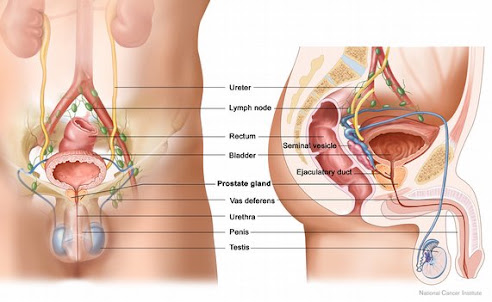
    The prostate gland is part of the male reproductive system. Prostate cancer is a malignant tumor of the prostate gland. The prostate gland is located directly beneath the bladder and in front of the rectum.

    Many men, especially those later in life have made the decision with their doctors to simply watch and wait. The prostate is a small, walnut-sized structure that makes up part of a man's reproductive system; it wraps around the urethra, the tube that carries urine out of the body. Prostate cancer is the third most common cause of death from cancer in men of all ages and is the most common cause of death from cancer in men over 75 years old.

    One of the most common symptoms is the inability to urinate at all. Some men will experience symptoms that might indicate the presence of prostate cancer. Having one or more cancer symptoms does not necessarily mean that you have prostate cancer.

    Weak or interrupted flow of urine and painful or burning urination can be symptoms to watch out for. Other symptoms might include unintentional weight loss and lethargy. If you have one or more prostate cancer symptoms, you should see a qualified doctor as soon as possible.

    There is a newer test called AMACR that is more sensitive than the PSA test for determining the presence of prostate cancer. A bone scan can indicate whether the cancer has spread or not. When a digital rectal exam is performed it often reveals an enlarged prostate with a hard, irregular surface.

    Another test usually used when prostate cancer symptoms are present is the digital rectal exam (DRE) performed by the doctor. There are several potential downsides to PSA testing; for example a high PSA does not always mean a patient has prostate cancer. A number of tests may be done to confirm a diagnosis of prostate cancer.

    Since prostate tumors require testosterone to grow, reducing the testosterone level is used to prevent further growth and spread of the cancer. Thoroughly discuss your treatment options and concerns with your doctor and other health professionals; it never hurts to get a second or even third opinion or more if necessary. The conventional treatment of prostate cancer is often controversial.

    If chemotherapy is decided upon after the first round of chemotherapy, most men receive further doses on an outpatient basis at a clinic or physician's office. Surgery, radiation therapy, and hormonal therapy can interfere with libido on a temporary or permanent basis. Hormone manipulation is mainly used as a treatment to relieve symptoms in men whose cancer has spread.

    Recent improvements in surgical procedures have made complications occur less often. Whether radiation is as good as removing the prostate is debatable and the decision about which to choose, if any, can be difficult. Be aware that some men chose natural treatment options and forgo any surgery, radiation or chemotherapy.

    Besides hormonal drugs, hormone manipulation may also be done by surgically removing the testes. Surgery is usually only recommended after thorough evaluation and discussion of all available treatment options. In the early stages, surgery and radiation may be used to remove or attempt to kill the cancer cells or shrink the tumor.

    Anyone considering surgery should be aware of the benefits, risks and the extent of the procedure. Chemotherapy medications are often used to treat prostate cancers that are resistant to hormonal treatments.

    If you do choose invasive conventional treatment, you can always change your diet and do non-invasive natural treatments too. As new research comes out adjust your treatment options accordingly. If you haven't been diagnosed but are concerned about symptoms you should call for an appointment to see your doctor; and if you're a man older than 50 who has never been screened for prostate cancer (by rectal exam and/or PSA level determination) or not had a regular annual exam, or have had a family history of prostate cancer, make an appointment soon.

    For more information on prostate cancer treatments and prostate cancer symptoms go to http://www.BestProstateHealthTips.com Helen Hecker R.N.'s website specializing in prostate and prostate cancer tips, advice and resources, including information on prostate tests and natural prostate cancer treatments

    Article Source: http://EzineArticles.com/?expert=HelenHecker
    http://EzineArticles.com/?Prostate-Cancer-Treatments-Made-Easy&id=489469

    Why You Should Consider a Prostate Cancer PSA Test TODAY

    Why You Should Consider a Prostate Cancer PSA Test TODAY
    By Abbie Frank

    Prostate Cancer kills if allowed to grow. If ever there was a good reason to have a simple blood test, this is it. The Prostate cancer PSA (Prostate Specific Antigen) test is one of the tests given to determine if cancer cells are present in an otherwise healthy prostate. It is a simple blood test to help doctors diagnose and identify the existence of prostate cancer.

    The PSA test, although considered a prostate specific test is not really an absolute definitive test for the cancer. Depending on the research conducted, the PSA test is known to be somewhere between 85 and 95% accurate in identifying prostate cancer.

    While an elevated PSA test may suggest the presence of prostate cancer, it's not an absolute. If however you have an elevated result, your doctor will probably want to do additional testing for a more complete and accurate assessment of the potential cancer. The last thing you want to do is to allow prostate cancer to grow beyond the prostate gland.

    The good news is that BPH or Benign Prostatic Hyperplasia, better known as an enlarged prostate can also elevate the PSA test results. Even Prostatitis and Lower Urinary Tract symptoms can show elevated levels of PSA so if you have an elevated test result don't panic! A normal result from a PSA test, doesn't guarantee that your free from cancer, nor does a higher than normal result means you do have cancer

    It's critical that you follow your doctor's lead in regard to dealing with the Prostate Specific Antigen test results. The results are an indication in a tool only to develop a complete diagnosis. To complicate matters more, PSA levels can also increase with age. Oh and the relative size of your prostate also plays a factor in interpreting the results.

    Remember that as many as two out of three people with elevated the PSA readings DO NOT have a malignancy

    Here's a quick list of the benefits and reasons why you should consider getting a PSA test

    1. It's possible to detect a cancerous condition before any symptoms are known

    2. Early detection catches prostate cancer before it is spread increasing the chances of a complete cure

    3. The PSA blood test has been recognized as a contributing factor that has significantly reduced the number of prostate cancer death

    The PSA test also delivers a false positive, which is a normal PSA level in about 20% of the time. It is still recognized as a good indicator of potential cancerous conditions and should be taken seriously. A 2005 Harvard study indicated that men having an annual PSA test were almost 3 times LESS likely to die of prostate cancer than men who didn't bother with the test. So the best reason to have the test is that without it, you greatly increase the chances of dying from prostate cancer!

    Abigail Franks has written many articles on the subject of prostate cancer. On her site you can find valuable Prostate Cancer Information and more about early detection with Prostate Cancer Tests

    Article Source: http://EzineArticles.com/?expert=AbbieFrank
    http://EzineArticles.com/?Why-You-Should-Consider-a-Prostate-Cancer-PSA-Test-TODAY&id=504250

    Worried About Getting Prostate Cancer Think Living Foods

    Worried About Getting Prostate Cancer -Think Living Foods
    By Helen Hecker

    Early prostate cancer is confined to the prostate gland itself; most of the patients with this type of cancer can live for years without any problems. Simply put, cancer that grows in the prostate gland is called prostate cancer. In most men, prostate cancer grows very slowly; most men will never even know they have the condition.

    Men at higher risk for prostate cancer include African-American men older than 60, farmers, tire plant workers, painters, and men exposed to cadmium; the lowest number of cases occurs in Japanese men and those who do not eat meat who reach the age of 80. Detected in its early stages, it can be effectively treated and cured. About 80 percent of men who reach the age of 80 have prostate cancer.

    One of the most common symptoms is the inability to urinate, get checked right away. There are other symptoms that may not be mentioned here. Most prostate cancer symptoms, although associated with prostate cancer, are more likely to be connected to non-cancerous conditions.

    If you have one or more symptoms, you should see a qualified doctor as soon as possible. If cancer is caught at its earliest stages, most men will not experience any symptoms. The need to urinate frequently, especially at night is another symptom.

    A prostate gland biopsy usually confirms the diagnosis. A bone scan can indicate whether the cancer has spread or not. A chest x-ray may be done to see if there's a spread of cancer.

    There is a newer test called AMACR that is more sensitive than the PSA test for determining the presence of prostate cancer. Urine or prostatic fluid cytology may reveal unusual cells. CT scans may be done to see if the cancer has metastasized (spread).

    What you can do now is begin to understand what exactly your treatment options are and where you're going to begin. Besides hormonal drugs, hormone manipulation may also be done by surgically removing the testes. Recent improvements in surgical procedures have made complications occur less often.

    Since prostate tumors require testosterone to grow, reducing the testosterone level is used to prevent further growth and spread of the cancer. Surgery, radiation, hormonal therapy and chemotherapy all have significant side effects; know fully what they are before you proceed. Surgery, radiation therapy, and hormonal therapy can interfere with libido on a temporary or permanent basis.

    The conventional treatment of prostate cancer is often controversial. Medicines can be used to adjust the levels of testosterone; called hormonal manipulation. Radiation therapy to the prostate gland is either external or internal, both of which use high-energy rays to kill cancer cells and shrink tumors.

    Surgery, called a radical prostatectomy, removes the entire prostate gland and some of the surrounding tissues. An oncologist, a cancer specialist, will usually recommend treating with a single drug or a combination of drugs. Be aware that some men chose natural treatment options and forgo any surgery, radiation or chemotherapy.

    Make highly nutritious raw applesauce using a food processor and put in 3-4 cored pesticide-free apples, with the skin on, and mix for a minute; so much better for you than canned highly processed applesauce and add 1/4 tsp. cinnamon or two tablespoons of freshly ground flaxseed for another boost. If you're not already doing so, make a serious effort to watch your diet closely. For snacks, choose raw nuts without salt instead of lifeless roasted nuts.

    Make smoothies with fruit only, using a base of two bananas, adding a cup of frozen or fresh blueberries and mango chunks or substitute any other fruit and add an energy boost of two tablespoons of coconut oil; add one or two leaves of kale for another highly nutritional boost. Making ginger tea, by adding a thin slice or two of fresh gingerroot to hot water, is helpful to many people I know. Buy lacinato kale and juice it in your juicer with sweet carrots.

    Consider taking cod liver oil or fish oil supplements every day. Eat high-fiber snacks like raw nuts (soak them overnight first), raw seeds, and dried fruit, such as dates, and figs. Use flaxseed oil or walnut oil in your daily dark green salad.

    The one thing that you should not do however is rely on information obtained from the Internet to make your final decision; double-check everything. If you do choose invasive conventional treatment, you can always change your diet and do non-invasive natural treatments too. With the advent of PSA testing, most prostate cancers are now found before they cause any symptoms.

    For more information on prostate cancer treatments and prostate cancer symptoms go to http://www.BestProstateHealthTips.com Helen Hecker R.N.'s website specializing in prostate and prostate cancer tips, advice and resources, including information on prostate tests and natural prostate cancer treatments

    Article Source: http://EzineArticles.com/?expert=HelenHecker
    http://EzineArticles.com/?Worried-About-Getting-Prostate-Cancer--Think-Living-Foods&id=546743

    Sex After Prostate Cancer Will Fear or Love Prevail in Your Relationship? Communication is the Key

    Sex After Prostate Cancer- Will Fear or Love Prevail in Your Relationship?- Communication is the Key
    By Lori Wilk

    If you've read any of my articles in the past, you know that I'm not a doctor, I'm a wife, and a communicator by profession. My husband survived Prostate Cancer a little more than six years ago. We have experienced the before,during, and after procedure stress in our lives and our relationship. I write for inspiration, love, and hope for all who care to read what I offer.

    Before procedures, everyone is worried about the outcome of the procedures. After the procedures, everyone has questions about the relationship, sex, and love. It can get confusing sometimes. Add to this confusion and frustrations about our bodies and aging with the fact that middle-aged women also are or will be dealing with menopausal and hormonal issues of their own and wow.....it's nuts.

    A middle-aged wife might be getting more emotional than ever before. Her hormones and patience-level may leave lots to desire. If the man's physical state and emotional state are not the same as months or years previous, there's more joint stress.

    My husband has spent lots of hours worrying after the surgery about my looks and my mental state. He worried, way too much about my being desirable and whether or not I would continue to want him. He worried about other men wanting me and whether I would cheat on him if he had problems? He worried about aging and about needing dentures.

    Let's face it, medical procedures don't make you feel sexy unless you're augmenting something. Even then, you definitely don't feel sexy until after you've healed. Medical procedures are stressful because we are human.

    You will have questions and you will probably worry and be scared about different things, but if you can tell your partner and discuss openly how to help each other, you will have a stronger connection. I wish you good luck and I send my love.

    Lori Wilk, MBA, is a Las Vegas , motivational speaker, author, and host of the internet talk show Successipes at http://www.success-talk.com. If you enjoyed this article, syndicate me, add me to your web site, send me an e-mail, or go to http://www.loriwilkarticles.com .c.2007 Lori Wilk. All rights reserved Worldwide. Reprint rights: You may reprint this article if you do not alter it in any way, give author name recognition, keep all links active, and follow ezine articles guidelines for publishers.

    Article Source: http://EzineArticles.com/?expert=LoriWilk
    http://EzineArticles.com/?Sex-After-Prostate-Cancer--Will-Fear-or-Love-Prevail-in-Your-Relationship?--Communication-is-the-Key&id=634124

    Sunday, September 7, 2008

    10 Commonly Asked Prostate Cancer Questions

    10 Commonly Asked Prostate Cancer Questions
    By Donald Saunders

    For the millions of men who encounter prostate problems each year and, in particular those who are diagnosed with prostate cancer, we have picked out ten of the most frequently asked questions about the prostate and prostate cancer.

    Question 1. What is the prostate gland?

    The prostate gland, which when healthy is about the size of a walnut, lies between the rectum and the bladder and forms part of the male reproductive system, making and storing a fluid contained within semen. The prostate gland partially surrounds the urethra and, when it becomes enlarged, it can slow or even stop the flow of urine.

    Question 2. What is prostate cancer?

    Prostate cancer is the second commonest form of cancer in the United States today. In 2006 approximately 235,000 men in the US were diagnosed with prostate cancer and some 27,000 men died of the disease. In most cases prostate cancer appears relatively late in life and is slow growing and, for this reason, many men with prostate cancer die from other unrelated causes.

    Question 3. Who is at risk of contracting prostate cancer?

    The simple answer is that all men are at risk of contracting prostate cancer. This said, prostate cancer is age related and so it is more likely to appear the older you get. In addition, prostate cancer is more likely to appear in men with a family history of the disease and in black men. There are also quite marked differences seen between countries with the United States having the highest incidence and Japan the lowest. While these differences are not entirely understood it is believed that diet may play an important role.

    Question 4. What are the symptoms of prostate cancer?

    It is possible to suffer from prostate cancer for many years without displaying any symptoms at all. However when symptoms do appear they are likely to include the need for frequent urination (particularly during the night), difficulty in urinating, a weak flow or urine which tends to stop and start, pain when urinating, blood in the urine or semen, painful ejaculation and frequent pain in the lower back as well as in the hips or upper part of the thighs.

    It is important to note that while these can indicate the presence of prostate cancer they can also be symptomatic of a number of other conditions and you should check with your doctor and not simply assume that because you are experiencing these symptoms that you have prostate cancer.

    Question 5. What other conditions are associated with prostate cancer symptoms?

    It is very common in older men for the prostate gland to enlarge placing pressure on both the bladder and the urethra and interfering with both the flow of urine and with sexual function. This condition is not cancer but is a benign condition known as benign prostatic hyperplasia, or BPH.

    In addition, symptoms similar to those seen in prostate cancer can also be experienced as the result of a prostate infection known as prostatitis which causes inflammation of the prostate.

    Question 6. Is it possible to screen for prostate cancer before symptoms appear?

    There are currently two commonly performed tests which are carried out to detect the presence of prostate cancer. Although neither test is in itself a definitive test for prostate cancer, both tests can indicate problems developing with the prostate gland and thus indicate the need for more specific testing.

    The two tests currently used to detect the possible presence of prostate cancer are the digital rectal exam (DRE), in which a doctor feels the prostate through the rectum to find hard or lumpy areas, and a blood test used to detect a substance made by the prostate called prostate specific antigen (PSA).

    Question 7. How reliable are the present screening tests?

    Neither the digital rectal exam nor the PSA blood test are perfect and the DRE can easily miss prostate cancers while it is also possible for men with prostate cancer to show normal levels of PSA in the blood.

    The two tests used together do produce reasonable results and are certainly better than not screening for the condition at all, but more accurate screening is required and studies are underway to improve screening in the next few years.

    Question 8. How is prostate cancer diagnosed?

    The only sure way to confirm the presence of prostate cancer is to carry out a prostate biopsy during which a number of small samples of tissue are taken from various parts of the prostate gland for microscopic laboratory examination.

    Question 9. How is prostate cancer treated?

    Provided the cancer is localized (confined to the prostate gland) there are currently three main forms of treatment available.

    The first is simply to watch and wait. This may seem a strange form of treatment but in older patients who may have other serious medical problems it may be best to simply leave prostate cancer untreated as long as it remains confined to the prostate gland.

    The second form of treatment is radiation therapy to kill the cancer cells delivered either using traditional radiotherapy techniques on an outpatient basis, or by implanting radioactive seeds into the prostate gland.

    Finally, prostate cancer can be treated by simply removing the prostate gland surgically.

    Question 10. What is the best treatment for localized prostate cancer?

    There are a large number of factors which need to be taken into consideration before deciding upon the treatment that is right for you and the options need to be carefully considered and discussed with both your family and your doctor.

    In most cases prostate cancer is slow to develop and there is rarely any need to rush into treatment. Take your time, collect as much information as you can about the disease and the options for treatment and make your decision based upon the information you have, the advice you are given and your own personal feelings on the matter.

    ProstateCancerExplained.com provides information on a variety of different prostate gland problems including an enlarged prostate gland, prostate symptoms, prostate surgery and finding a prostate cancer cure.

    Article Source: http://EzineArticles.com/?expert=DonaldSaunders
    http://EzineArticles.com/?10-Commonly-Asked-Prostate-Cancer-Questions&id=485465

    Prostate Cancer Your Quick Guide

    Prostate Cancer - Your Quick Guide
    By Helen Hecker

    The prostate gland is located just beneath the bladder and in front of the rectum. Although one man in six will be diagnosed with prostate cancer during his lifetime, only one man in 34 will die of the disease. About 80 percent of men who reach the age of 80 will have prostate cancer.

    Most men younger than 40 are rarely ever diagnosed with prostate cancer. Prostate cancer is normally a very slow growth cancer that can take many years before it becomes deadly. The most common cancer in American men, that is excluding skin cancer, is prostate cancer.

    Additional symptoms that may be associated with this disease are bone pain or tenderness, and abdominal pain. One of the most common symptoms is the inability to urinate. There are several other symptoms that may not be mentioned here.

    Because prostate cancer symptoms can mimic other diseases or disorders, men who experience any of these symptoms should undergo a thorough work-up to determine the underlying cause of the symptoms. Blood in the urine or semen and frequent pain or stiffness in the lower back, hips, or upper thighs are often symptoms of cancer. One prostate cancer symptom is difficulty starting urination or holding back urine.

    Your doctor may use either one or two of the most common tests for prostate cancer detection. One downside to PSA testing is that health care providers are detecting and treating some very early-stage prostate cancers that may never have caused the patient any harm. There are several potential downsides to PSA testing; for example a high PSA does not always mean a patient has prostate cancer.

    A chest x-ray may be done to see if there is a spread of cancer. Urine or prostatic fluid cytology may reveal unusual cells. There is a newer test called AMACR that is more sensitive than the PSA test for determining the presence of prostate cancer.

    Medications can have many side effects, including hot flashes and loss of sexual desire. Some drugs with numerous side effects are being used to treat advanced prostate cancer, blocking the production of testosterone, called chemical castration; it has the same result as surgical removal of the testes. An oncology specialist will usually recommend treating with a single drug or a combination of drugs.

    Other medications used for hormonal therapy, with side effects, include androgen-blocking agents, which prevent testosterone from attaching to prostate cells. In the early stages, surgery and radiation may be used to remove or attempt to kill the cancer cells or shrink the tumor. Thoroughly discuss your treatment options and concerns with your doctor and other health professionals; it never hurts to get a second or even third opinion or more if necessary.

    Prostate cancer that has metastasized may be treated conventionally with drugs to reduce testosterone levels, surgery to remove the testes, chemotherapy or nothing at all. The approaches to treatment include: ever watchful waiting to see whether the cancer is growing slowly and not causing any symptoms. Many men simply want the best treatment they can get but what's important is picking the best treatment for you.

    Surgery, radiation therapy, and hormonal therapy can interfere with libido on a temporary or permanent basis. Hormone manipulation is mainly used as a treatment to relieve symptoms in men whose cancer has spread. Surgery is usually only recommended after thorough evaluation and discussion of all available treatment options.

    What you can do now is begin to understand what exactly your treatment options are and where you're going to begin. In patients whose health makes the risk of surgery unacceptably high, radiation therapy is often the chosen conventional alternative.

    As new research comes out adjust your treatment your options accordingly. Just about all men with prostate cancer survive at least five years after their initial diagnosis, 93% survive at least 10 years, and 67% survive more than 15 years. In the end, only you with the help of your doctors, knowing your individual situation, can determine the best treatment program for you.

    For more information on prostate cancer treatments and prostate cancer symptoms go to http://www.BestProstateHealthTips.com Helen Hecker R.N.'s website specializing in prostate and prostate cancer tips, advice and resources, including information on prostate tests and natural prostate cancer treatments

    Article Source: http://EzineArticles.com/?expert=HelenHecker
    http://EzineArticles.com/?Prostate-Cancer---Your-Quick-Guide&id=507987

    Worried About Prostate Cancer? Nurse's Report

    Worried About Prostate Cancer? - Nurse's Report
    By Helen Hecker

    You may have just been diagnosed with prostate cancer and don't know what to do; the first thing to do is not to panic. Early prostate cancer is confined to the prostate gland itself; most of the patients with this type of cancer can live for years without any problems. The prostate is a small, walnut-sized structure that makes up part of a man's reproductive system; it wraps around the urethra, the tube that carries urine out of the body.

    The prostate gland is located directly beneath the bladder and in front of the rectum. Prostate cancer is characterized by 'grade' and 'stage'; grade is given to indicate how quickly a cancer is growing -- the higher the grade, the more likely it is that the cancer will grow and spread rapidly and the size and extent of the tumor will determine its stage.

    The male hormone testosterone contributes to the growth of cancer. Blood in the urine or semen and frequent pain or stiffness in the lower back, hips, or upper thighs are often symptoms of cancer. Weak or interrupted flow of urine and painful or burning urination can be symptoms to watch out for. One prostate cancer symptom is difficulty starting urination or holding back urine.

    If cancer is caught at its earliest stages, most men will not experience any symptoms. One symptom is a need to urinate frequently, especially at night. There may be other symptoms not mentioned here.

    Your doctor may use either one or two of the most common tests for prostate cancer detection. A number of tests may be done to confirm a diagnosis of prostate cancer. A prostate biopsy usually confirms the diagnosis.

    Another test usually used when prostate cancer symptoms are present is the digital rectal exam (DRE) performed by the doctor. When a digital rectal exam is performed it often reveals an enlarged prostate with a hard, irregular surface. Urine or prostatic fluid cytology may reveal unusual cells.

    The conventional treatment of prostate cancer is often controversial. Impotence is a potential complication after the prostatectomy or after radiation therapy. If chemotherapy is decided upon after the first round of chemotherapy, most men receive further doses on an outpatient basis at a clinic or physician's office.

    An oncology specialist will usually recommend treating with a single drug or a combination of drugs. Surgery, called a radical prostatectomy, removes the entire prostate gland and some of the surrounding tissues. Chemotherapy medications are often used to treat prostate cancers that are resistant to hormonal treatments.

    What you can do now is begin to understand what exactly your treatment options are and where you're going to begin. Treatment options can vary based on the stage of the tumor. Surgery, radiation, hormonal therapy and chemotherapy all have significant side effects; know fully what they are before you proceed.

    Many men simply want the best treatment they can get but what's important is picking the best treatment for you. Anyone considering surgery should be aware of the benefits, risks and the extent of the procedure. In the early stages, surgery and radiation may be used to remove or attempt to kill the cancer cells or shrink the tumor.

    Besides hormonal drugs, hormone manipulation may also be done by surgically removing the testes. Prostate cancer that has spread (metastasized) may be treated conventionally with drugs to reduce testosterone levels, surgery to remove the testes, chemotherapy or nothing at all.

    Just about all men with prostate cancer survive at least five years after their diagnosis, 93% survive at least 10 years, and 67% survive more than 15 years. With the advent of PSA testing, most prostate cancers are now found before they cause any symptoms. If you've already been diagnosed with prostate cancer, pick the option that's best suited to you and your continuing good health.

    For more information on prostate cancer treatments and prostate cancer symptoms go to http://www.BestProstateHealthtips.com Helen Hecker R.N.'s website specializing in prostate and prostate cancer tips, advice and resources, including information on prostate tests and natural prostate cancer treatments

    Article Source: http://EzineArticles.com/?expert=HelenHecker
    http://EzineArticles.com/?Worried-About-Prostate-Cancer?---Nurses-Report&id=482795

    Saturday, September 6, 2008

    Prostate Health for Men

    Prostate Health for Men
    By Andrew Bicknell

    Prostate health is one of the most important aspects of a man's health and is essential in the prevention of a number of conditions that can affect it. In recent years the issue of prostate health has moved to the forefront of many news and media stories and many of us know or have known someone who has suffered from prostate problems.

    If you're a man, chances are that you will eventually have some form of problem with your prostate gland. More than half of men over age 60 develop an enlarged prostate, a condition known as benign prostatic hyperplasia, or BPH. In addition, the American Cancer Society estimates that more than 184,000 men in the United States will be diagnosed with prostate cancer this year. New cases of prostate cancer have increased rapidly in recent years. Most of this increase has been attributed to the greater use of screening guidelines, and especially the widespread introduction of the Prostate-Specific Antigen (PSA) test.

    The causes of prostate cancer are not fully known. The risk of developing prostate cancer rises sharply after age 50, and risk doubles every ten years thereafter. Men with close family members (father or brother) who have had prostate cancer are more likely to get prostate cancer themselves, especially if their relatives were young when they got the disease. Fortunately there is promising research that shows preventive measures and early detection screening should help reduce the risk of death from prostate cancer.

    The three common diseases of the prostate are benign prostatic hyperplasia (BPH), commonly known as an enlarged prostate, prostatitis (inflammation of the prostate) and prostate cancer. The modern lifestyle of stress; long hours of sitting, driving or TV watching; stuffing food and emotions; eating fast food, flesh and milk products; regular intake of sugar, caffeine, and alcohol; and environmental toxicity all set the stage for chronic, debilitating and degenerative diseases, including prostate enlargement (BPH Benign Prostatic Hypertrophy) and prostate cancer.

    We have become a nutritionally advanced culture who has learned more and more about natural supplements and products that can help us achieve and maintain health much longer than we used to, as well as to eat the right foods that will make our organs function at peak levels well into late ages. The foods that a man can eat to support the health of your prostate actually have multiple health benefits in addition to prostate health. This is because they are mostly classed into a coined group of foods dubbed super foods for their healing and health promoting properties, as well as therapeutic uses.

    As long as you maintain a quality diet with a variety of color, less red meats and more fruits and veggies, you can rest assured you are doing all you can to promote a long, healthy and complication free life for your prostate gland. Not only that, these foods will benefit other areas of your health as well, making it well worth your while to pay attention to what you put in your body.

    Prostate health is extremely important and requires the same attention that you would afford any other part of your body. It is emerging as a key priority in health care today, but despite the increasing awareness of its affects many men remain unaware of its symptoms, the damage it can do and the treatments available.

    To learn more about Prostate Health please visit the website Prostate Health Answers by clicking here.

    Article Source: http://EzineArticles.com/?expert=AndrewBicknell
    http://EzineArticles.com/?Prostate-Health-for-Men&id=617717

    Friday, September 5, 2008

    Prostate Cancer Survival Rates in UK

    Prostate Cancer Survival Rates in UK
    By Adrian Jones

    There are approximately 25 000 men newly diagnosed with prostate cancer every year in the United Kingdom. For these men the risk of dying from their prostate cancer depends on a number of risk factors. For example if the cancer is confined to the prostate gland at diagnosis the chance of surviving to 5 years is 70%. If the cancer has already spread e.g. to the bones then only 20% of men will survive to five years. Of all the men who currently have prostate cancer in the UK approximately 10,000 will die of the disease each year. The prostate cancer survival rate is much higher in the developed world - unsurprisingly.

    When a man is first diagnosed with prostate cancer then the doctor who has found the cancer (most often a urologist a surgeon who specialises in looking after problems to do with the kidneys, prostate and bladder) will arrange a series of tests to help assess the risk for that individual patient. The results of these tests will in turn help the doctor and patient to decide the best treatment for that patient.

    Prostate Cancer Tests to Help Predict Survival

    1. Prostate Specific Antigen or PSA

    2. Digital Rectal Examination or DRE

    3. Trans-rectal Ultrasound and Biopsy

    4. CT or MRI Scan

    5. Bone Scan

    PSA This is a protein made by the prostate gland which can be measured on a sample of your blood i.e. a blood test. The PSA level can be raised by non cancerous problems with the prostate gland i.e. not all men who have a raised PSA have prostate cancer. Also some men who have prostate cancer will not have a raised PSA. However PSA does tend to increase as prostate cancers grow, invade and spread so PSA can be used to monitor how a prostate cancer is progressing or how it is responding to treatments.

    DREThis is where a doctor feels the prostate gland through the back passage. It tells the doctor how big the prostate gland is, whether the cancer is able to be felt easily and whether it has invaded the area near by.

    Tran-Rectal Ultrasound and BiopsyFor this test you need to lie on your side with your knees brought up into the chest (same position as for a DRE). An ultrasound probe is then inserted into the back passage. This enables the doctor to see on a screen the outline of the prostate gland. There is no radiation involved. The image on the screen then allows the doctor to insert a needle safely into the prostate gland to take some samples of the prostate tissue. Usually several samples are taken from each area of the prostate gland. These samples are then sent to a laboratory to be looked at under a microscope. This allows confirmation that there is prostate cancer present and tells us how aggressive the cancer looks. Sometimes a local anaesthetic is used to help make the procedure more comfortable.

    CT or MRI ScanThis is usually carried out in an x-ray department and involves lying still on a thin couch which moves through either a big donut (CT) or into a long tunnel (MRI). This is not painful in any way. The pictures gained from this test helps the doctors to see whether the prostate cancer is still within the prostate gland or whether it had started to invade out of the gland into other surrounding structures. This tells the doctor what stage the prostate cancer is.

    Bone ScanThis requires you to have an injection and then to lie on a special table where a camera scans the whole body. It shows up whether any of the bones in the body have been affected by the prostate cancer i.e. whether the prostate cancer has spread to the bones.

    Prostate Cancer Stage and Survival

    The stage of prostate cancer describes how far the cancer has grown and spread. It is assessed by a mixture of DRE and CT/MRI scans.

    T1 StageThis is very early prostate cancer which can only be seen under a microscope. At this stage the cancer would not cause any symptoms. Men with this stage are at low risk from their disease may not need any treatment but surveillance. The original cause of a prostate cancer problem can be difficult to diagnose.

    T2 StageThis is early prostate cancer but is now big enough to be felt by a doctor on DRE. This may still not have caused any symptoms. This is most often cured if treatment is undertaken at this stage and about 70% of men are still alive after 5 years i.e. average length of survival from diagnosis is well over 5 years.

    T3 StageThis is locally advanced prostate cancer which has started to extend and invade outside of the prostate gland. This stage would often cause bladder symptoms in men. By this stage in the disease the chance of cure with treatments is reduced however survival is often around five years.

    T4 StageThis is more advanced prostate cancer which invades the structures around the gland. At this stage there are often already secondaries e.g. bone metastases. If the disease has spread it is usually incurable but may be controlled for some time. The average survival is between 1 and 3 years.

    Predicting Survival in Prostate Cancer

    Doctors use a combination of risk factors to predict the behaviour of prostate cancer but cancers do not always act as expected. The factors they consider include the cancer stage (see above), the age of the patient, the PSA level and how quickly it is rising, and the Gleason Score. The Gleason score is a marker of how aggressive the cancer looks under the microscope and how much of the gland is affected by cancer.

    Adrian Jones has a personal interest in promoting awareness and self-help in dealing with several forms of cancer. This article is from his website dealing with prostate cancer and prostate cancer treatments. He writes on other forms of cancer, including colon cancer. This article is available for reprint for your website and/or newsletter, provided that you maintain its copyright integrity and include this resource box information.

    Article Source: http://EzineArticles.com/?expert=AdrianJones
    http://EzineArticles.com/?Prostate-Cancer-Survival-Rates-in-UK&id=313455

    How Effective Are Natural Cures For Prostate Cancer And What Are Some Popular Treatments?

    How Effective Are Natural Cures For Prostate Cancer And What Are Some Popular Treatments?
    By Tim Gorman

    Natural therapies for treating prostate cancer often consist of a number of treatments, including herbal remedies, natural vitamins, minerals or dietary supplements. Other treatments include massage, acupuncture, homeopathy and magnetic therapy.

    Most natural treatments are used in conjunction with a medical treatment plan, they are not intended as a complete cure for prostate cancer. The effectiveness of natural remedies is under debate, many patients claim that these treatments have been beneficial for them, while many medical practitioners claim that they are not much use and cause patients to have false hope. They also claim that natural remedies can interfere with regular treatments in prostate cancer patients.

    Homeopathy is a well-known natural therapy that works on the principal that substances that can make normally well people ill can have the opposite effect on patients who are already ill if the doses of the substance are very small.

    There have also been studies conducted for the usefulness of magnetic therapy to help with the cure of prostate cancer. It is believed that the north pole of the magnets can aid in slowing down the growth of a tumor. Patients treat themselves with magnetic therapy by sitting on a pad that contains magnets.

    Acupuncture and massage are often recommended for prostate cancer sufferers as a complimentary treatment. Proper massage will make the patient feel more relaxed and able to cope better with stress. Massage and acupuncture are widely known as complimentary treatments rather than alternative cures for sufferers. Doctors often suggest that a patient use these treatments to help them cope with their condition.

    Natural cures for prostate cancer are still being debated between doctors and natural therapy professionals, in regard to their effectiveness and ability to cure prostate cancer. If a patient is interested in learning more about natural therapies or remedies, a good place to start is to consult the doctor who is treating them and discuss the treatment, including the advantages or disadvantages of using these treatments in conjunction with the normal treatment programs.

    It is important that patients make sure to tell their doctor about any natural remedies or therapies that they are thinking of using before starting them. Even herbal remedies can have a reaction to some treatments that are already being used to treat prostate cancer.

    Fo rmore information on the benefits of natural cures for prostate cancer please visit http://www.onlineprostatehealthguide.com where you will find information and resources dealing with radiation therapy for prostate cancer treatments, prostate cancer symptoms and hormonal therapy for prostate cancer treatments.

    Article Source: http://EzineArticles.com/?expert=TimGorman
    http://EzineArticles.com/?How-Effective-Are-Natural-Cures-For-Prostate-Cancer-And-What-Are-Some-Popular-Treatments?&id=371588

    You Do What It Takes To Keep In Shape But What Do You Do To Keep Your Prostate In Shape!

    You Do What It Takes To Keep In Shape, But What Do You Do To Keep Your Prostate In Shape!
    By Jonathan G. Michel

    This year, approximately 234,460 men will be diagnosed with prostate cancer, and approximately 27,350 will die as a result of the disease.--Centers for Disease Control and Prevention.

    Prostate Cancer is the most common form of cancer amongst men in the United States and Canada, other than skin cancer. Prostate cancer is the second-leading cause of cancer deaths of men after lung cancer...So now do you understand why you must take control of your prostate!

    Maintaining prostate health is a major concern for men 40 and over in North America. Despite this, many men are reluctant to broach the subject with their physicians. Prostate cancer occurs when the cells of the prostate begin to grow uncontrollably. When caught and treated early, prostate cancer has a cure rate of over 90%.

    The prostate is a small, squishy gland about the size of a walnut that sits under the bladder and in front of the rectum. The urethra, the narrow tube that runs the length of the penis and that carries both urine and semen out of the body, runs directly through the prostate; the rectum, or the lower end of the bowel, sits just behind the prostate and the bladder.

    Sitting just above the prostate are the seminal vesicles, two little glands that secrete about 60% of the substances that makes up semen; running alongside and attached to the sides of the prostate are the nerves that control erectile function.

    Have you noticed any of these symptoms?

    * Increased urinary urgency and frequency - especially at night?
    * Voiding slow, incomplete and sometimes painful or burning?
    * Decreased sexual activity and occasional impotence?
    * Lack of bladder control - incontinence?

    Rate your prostate health

    Find out now...with the following assessment survey: This survey was developed by the American Urological Association (AUA) and is currently the standard test to determine urinary health.

    Prostate Symptom Survey

    For questions 1 - 6, score 0 for not at all; score 1 for less than 1 time in 5; score 2 for less than half the time; 3 for about half the time; 4 for more than half the time; and 5 for almost always. Score Yourself.

    Over the past month or so, how often have you had a sensation of not emptying your bladder completely after you finished urinating?

    Over the past month or so, how often have you had to urinate again less than two hours after you finished urinating?

    Over the past month or so, how often have you found you stopped and started again several times when you urinated?

    Over the past month or so, how often have you found it difficult to postpone urination?

    Over the past month or so, how often have you had a weak urinary stream?

    Over the past month or so, how often have you had to push or strain to begin urination?

    Over the past month, how many times did you most typically get up to urinate - from the time you went to bed at night - until the time you got up in the morning? (0, 1, 2, 3, 4, or 5)

    Scoring:The sum of the answer scores gives us a better idea of the prostate condition as follows:

    1 - 7 = Mild 8 - 18 = Moderate 19 - 35 = Severe

    If your score shows that you should be more concerned about your prostate health... What are your options?

    Phytotherapeutic agents (herbs) represent nearly half of all the products dispensed for supporting prostate health in Italy; in Germany and Austria phytotherapy is the first choice for prostate support. ...Do they know something we don't?

    ================================================
    Learn why so many men have turned to phytotherapeutic agents to reduce the risk of prostate cancer. This combined to maintaining a strong immune system is the key to avoiding many types of cancers. Learn more, you owe it to yourself.Copyright 2006 http://www.cancer-help-treatment.com
    ================================================

    Article Source: http://EzineArticles.com/?expert=JonathanG.Michel
    http://EzineArticles.com/?You-Do-What-It-Takes-To-Keep-In-Shape,-But-What-Do-You-Do-To-Keep-Your-Prostate-In-Shape!&id=347624