Stroke, Prostate Cancer, Laughter and the Melting Mood
By Kerry Wood
My recovery from a stroke suffered in 2001 seemed glacially slow while it was taking place. Now, howeverI feel almost completely recovered, and the difficulties with my right hand and arm and the speech problems are like dim recollections of something that happened decades ago.
I still have difficulty with cuff buttons on starched cuffs. My handwriting is slow. My singing voice is on furlough and recent attempts to throw a ball have been errant embarrassments, but I haven't taken the time to practice in order to restore either of those activities to previous levels of ability. Still, my golf game is pretty much back to where it was. I am exultant at having escaped the permanent serious disabilities that are visited on so many stroke victims.
One persistent symptom is pathological laughter. When I think of something funny or just vaguely silly or ironic, I crack up so badly that I am unable to speak for a minute or two. I never, previous to stroke, exhibited such idiotic laughter. On the plus side, my hysterics can be contagious. In social situations I often manage to get my companions laughing with nearly the same uncontrollability that plagues me. Technically, the symptom may result from lesions in the internal capsule and thalamus, basal ganglion, hypothalamus and ventral pons or from a cortical infarct in the territory supplied by the superior division of the middle cerebral artery.
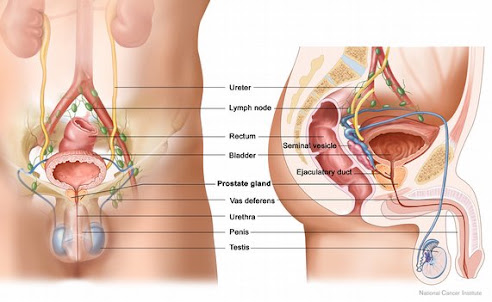
Such laughter is often associated with weeping. I have not done much blubbering since my stroke, but I did some research on these matters In recent weeks I have discovered in myself new or at least altered emotions. I am not merely getting in touch with my feminine side but being overwhelmed by it. About a month ago I was injected with a time-released dose of Lupron, an activator of female hormones. Each day I also ingest one tablet of Casodex, which along with the injection serves to limit my ordinary testosterone production, thereby shrinking my hyperplastic prostate gland and stopping the development of the malignancy contained therein. The doctors told me I could expect weight gain, loss of muscle mass, diminution of energy, hot flashes, possible development of breast tissue and loss of body hair. Fortunately, the latter two items have not manifested themselves and I dont think Ive had anything like a hot flash. I wouldnt have minded some hair growth in the area of my male pattern baldness, but that too has not occurred. Most surprising have been the changes in my emotional reactions.
For example, I lost control once on the telephone with a long-time friend discussing an ailment that had befallen the family dog. I feared the situation might necessitate euthanasia. To my surprise and shock, I dissolved into uncontrollable sobs. I dont remember weeping so violently since I began to count my age in double digits.
Another time, I had just finished reading a novel by a favorite author. A subplot involved some tense scenes such as the discovery by parents of their high-school-aged sons involvement in a gang rape. I found that I had a strongly empathic response to the mother, who was shamed and devastated and felt that she herself had been attacked and dishonored by her beloved son. I looked down on the father, regarding him as more of a proud, egocentric, disgustingly macho jackass than I would have had I read the book six months ago. Possibly in this fortieth novel that I have read by Robert B. Parker, he has suddenly improved his craft and is handling dialog and description with greater effectiveness. Or maybe I have shed some layers of callus from my emotional response centers and am more susceptible to sentimentality. I have a new understanding for the Player King in Hamlet, who breaks down in his speech about Hecuba and occasions Hamlets O, what a rogue and peasant slave am I! soliloquy Is it not monstrous that this player here,But in a fiction, in a dream of passion,Could force his soul so to his own conceitThat from her working all his visage wand;Tears in his eyes, distraction ins aspect,A broken voice, and his whole function suitingWith forms to his conceit? And all for nothing!For Hecuba?>
And then came the news of my brothera hard-drinking, robust giantfelled by a mysterious ailment that put him in the intensive care unit for a month. Listening to his wife struggling with tears as she told me of his precarious condition, I found myself once again prostrate with sadness. In recent years I have handled the deaths of my father and mother without great distress. Orphanhood, after all, is in store for all of us who live lives of normal length. But the possibility of becoming a 65-year-old only child brought on a period of abject grief that has been relieved slightly by guarded news of Kevins improvement.
Is my recent susceptibility to the lachrymose mood merely an aspect of advancing age, or can I blame my recent health problems and the hormone-releasing cancer treatment. I think of OthelloOf one whose subdued eyes,Albeit unused to the melting mood,Drop tears as fast as the Arabian treesTheir medicinal gum.
On a more cheerful major chord. Chloe, our beloved Wheaton Terrier, seems to have shaken off the apparent pinched nerve that for a while had rendered her nearly catatonic. Shes leaping about and chasing seabirds at the beach just as she used to. Sean is out of intensive care but not out of the woods. He is no longer hallucinating or requiring the almost constant supervision of the hospitals biggest male nurse to keep him from tearing out his IVs and trying to leave the hospital. I will fly down for a visit this Saturday and Sunday when I have a break from radiation treatments.
* * * * * *
Yes, two years after my stroke I was diagnosed with prostate cancer and underwent the treatments mentioned above. Whether the tear floods mentioned above were triggered by cancer treatment or a result of stroke is unimportant. I have had no recurrences of the weepingonly of the laughter. Given a choice, I'll go for laughter every time. And Sean is himself againback at work full-time.
Kerry Michael Wood, retired from a 37-year career as English teacher and textbook co-author, lives in Pacific Grove, California with his wife of 42 years. He taught in public and private schools in California as well as Istanbul, Turkey. He is the author of Past Imperfect, Present Progressive, a memoir. Further information is available at http://www.kerrymwood.com and he can be contacted at kerrywood@redshift.com.
Article Source: http://EzineArticles.com/?expert=KerryWood
http://EzineArticles.com/?Stroke,--Prostate-Cancer,-Laughter-and-the-Melting-Mood&id=237252