It would be nice to think that there was some simple routine that you could follow, or diet that you could adopt, or pill that you could take to give you a one hundred percent guarantee that you would not develop prostate cancer. Unfortunately no such routine, diet or pill exists today and, despite our best efforts, some of us will inevitable contract prostate cancer. There are, however, many things that you can do by way of prevention and it is certainly possible to lower your risk of developing the disease.
The first thing that you must do is to simply recognize that there is indeed a risk of contracting prostate cancer and that this risk will vary from person to person.
For example, if you have a family history of prostate cancer with perhaps a grandfather, father or brother dying from the disease then you are twice as likely to contract the disease as somebody without any family history. One difficulty here is that, because prostate cancer often strikes quite late in life and can sometimes be very slow to develop, many men die as a result of some other condition before their prostate cancer has developed to any great extent. So, if a member of your family has always been assumed to have died from a heart attack, that doesn't mean that he didn't suffer from prostate cancer and it's worth checking your family history closely to see if you are at higher than average risk.
Other risk factors include such things as race with African Americans, for example, at higher risk than Hispanic men who, in turn, are at higher risk than Caucasian men. People living in Western society are also at greater risk because of the nature of the diet followed by many in the West.
Whatever your level of risk, all men are at some risk of developing the disease and it is most likely to strike once you pass the age of 40. So what can be done to reduce the risk?
The two main areas to consider are your diet and the use of dietary supplements.
When it comes to diet the main culprit within the normal western diet would appear to be animal fat which, with the high level of meat in many western diets, is understandable. The solution here is simply to reduce the amount of meat in your diet and, when using meat, to stick to meats containing low levels of fat or to choose leaner cuts of high-fat meat.
When it comes to dietary supplements we enter something of a minefield, as opinions vary widely and are also often driven more by profit in this highly lucrative market than by any real medical evidence.
The list of possible dietary supplements for consideration in preventing prostate cancer is far too long for this short article and ranges from vitamins, such as vitamin E, and minerals, such as Selenium, to estrogen and green tea extract. It is also necessary, when looking at dietary supplements, to view the wider picture of your overall health and to consider these not simply in terms of preventing prostate cancer.
It is also an excellent idea when considering supplements to look first at your diet itself and the need for virtually all supplements can be eliminated if you simply ensure that the required vitamins and minerals are included within a properly balanced diet including a wide variety of such things as fresh fruit and vegetables.
Although many thousands of men will die this year from prostate cancer, a large proportion of these deaths will have been unnecessary and a combination of early prostate cancer screening and some simple preventative measures could have prevented thousands of unnecessary deaths.
For more information on how to prevent prostate cancer and what to look out for when it comes to enlarged prostate symptoms please visit ProstateCancerExplained.com
Article Source: http://EzineArticles.com/?expert=Donald_Saunders
Saturday, July 19, 2008

Prostate Cancer - How Prostate Cancer Grows And Why - Find Out
Prostate Cancer Information
Prostate Cancer is growing fast among the older men above 50 and as you grow older, your risk of having prostate cancer increases. Death is not definite in all the cases but the trouble it causes is nothing less than a slow death.
But if it gets diagnosed in its initial stage then it becomes easy to cure prostate cancer. And for that, you should know that how it grows.
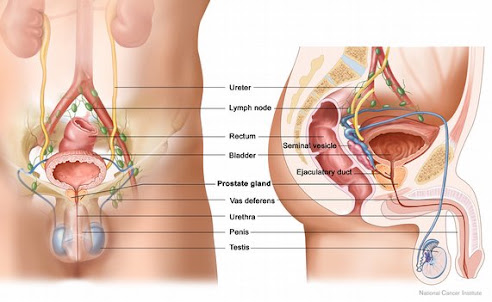
Now what happens, the male hormones especially testosterone, stimulates the growth of cancer cells in the prostate. This testosterone is produced by the testes (nearly 95%) and the rest 5% is produced by the adrenal glands (small glands above each kidney).
Prostate Cancer is slow-growing
Prostate Cancer grows at a quite low pace. A man suffering from Prostate Cancer may lead a normal life for several years without ever having cancer discovered. As mentioned above, that this cancer grows with the growing age of an old man. In most of the cases, men with prostate cancer get diagnosed after they cross 65.
Painful Urinating - a prostate cancer symptom
This cancer can cause a lot of damage to your body. As the prostate cancer grows, it starts squeezing the urethra which results into painful urinating. This pain is considered to be the first alarming sign of prostate cancer. But its not right to relate this symptom always to prostate cancer, it can also occur due to some other infections. Sometimes, prostate cancer without showing any symptoms starts attacking the cells close to the prostate. And this is really dangerous.
Bone Pain - another prostate cancer symptom
A stage comes when the cells break off from the cancer and spread reaching the the lymph nodes, various bones (especially the hip-bone and the lower back), lungs and sometimes it reaches your brain. And then these cells form tumors in other parts of the body and start expanding. These expanded tumors start squeezing those body parts resulting in the advanced stage of prostate cancer. And when these cells reach your bones, it causes bone pain in your body.
Navneet Brar is one of the very few who love to help others in need, just by sharing useful information on anything and everything on internet for FREE. So, to know more about prostate cancer, go for prostate cancer symptoms. And to get the latest updates on anything on internet, kindly visit his website http://www.top54u.com
Prostate Cancer is growing fast among the older men above 50 and as you grow older, your risk of having prostate cancer increases. Death is not definite in all the cases but the trouble it causes is nothing less than a slow death.
But if it gets diagnosed in its initial stage then it becomes easy to cure prostate cancer. And for that, you should know that how it grows.
Now what happens, the male hormones especially testosterone, stimulates the growth of cancer cells in the prostate. This testosterone is produced by the testes (nearly 95%) and the rest 5% is produced by the adrenal glands (small glands above each kidney).
Prostate Cancer is slow-growing
Prostate Cancer grows at a quite low pace. A man suffering from Prostate Cancer may lead a normal life for several years without ever having cancer discovered. As mentioned above, that this cancer grows with the growing age of an old man. In most of the cases, men with prostate cancer get diagnosed after they cross 65.
Painful Urinating - a prostate cancer symptom
This cancer can cause a lot of damage to your body. As the prostate cancer grows, it starts squeezing the urethra which results into painful urinating. This pain is considered to be the first alarming sign of prostate cancer. But its not right to relate this symptom always to prostate cancer, it can also occur due to some other infections. Sometimes, prostate cancer without showing any symptoms starts attacking the cells close to the prostate. And this is really dangerous.
Bone Pain - another prostate cancer symptom
A stage comes when the cells break off from the cancer and spread reaching the the lymph nodes, various bones (especially the hip-bone and the lower back), lungs and sometimes it reaches your brain. And then these cells form tumors in other parts of the body and start expanding. These expanded tumors start squeezing those body parts resulting in the advanced stage of prostate cancer. And when these cells reach your bones, it causes bone pain in your body.
Navneet Brar is one of the very few who love to help others in need, just by sharing useful information on anything and everything on internet for FREE. So, to know more about prostate cancer, go for prostate cancer symptoms. And to get the latest updates on anything on internet, kindly visit his website http://www.top54u.com
Proton Therapy For Prostate Cancer Treatment - Look Ahead Prostate Cancer
Modern man should be putting a braver face facing Prostate Cancer because Proton Therapy for treatment would mean a more efficient way in addressing the problems of Cancer as well as the complications it usually bring along. This treatment is the last option for a patient of Prostate. They come in the feet's of this expensive treatment as they have no other option for their problem. Yet Therapy for Cancer Treatment proves to be quite victorious in solving the cases of cancer.
An Evaluation of Proton Therapy for Prostate Cancer Treatment:
One of the most damaging side effects of radiation treatment for prostate is incontinence. If the urinary sphincter is damaged during the radiation treatment process, the patient will experience varying degrees of urinary incontinence, an unwilled action of urinating. This can be very life changing but there are those instances where a corrective surgery can be applied.
Serious incontinence cases though are rare, affecting 1% - 3% of the men undergoing radiation treatment. Though the symptoms will usually go away the longest in a year, it is permanent in less than 1% of the radiation treated men.
In consideration of the above all defects of radiation therapy, her comes a new treatment with latest technology known as Therapy for Prostate treatment. The probability of side effects under this therapy is very less as compared with that of radiation therapy.
It is helpful in solving problems like signs of prostate include a weak urine flow and even the inability to urinate. This condition is very painful and would be a hindrance to one's normal activities. In some cases, blood in the urine and/or semen can be found. Burning sensation during urination and pain in the lower back are signs of prostate as well.
Proton Therapy for Prostate Cancer Treatment is a Well-Matched Therapy:
Proton therapy for prostate cancer treatment is of fussy significance to the patients of Cancer at the very initial level. This therapy is analgesic and pain-relieving as compared with that of radiation therapy. Once diagnosed, planning the treatment should logically follow. Research has shown that prostate is treated with Therapy Treatment varies from one patient to the other and depending on the severity of the disease. Understanding the cause or disease will help in making better informed decisions about the Therapy for cancer. If detected in its earlier stage the patient has bigger chances of recovering from the disease.
However the Proton Therapy for Cancer Treatment is costly as compared with radiation therapy because it involves use of expensive and latest technological tools and equipments. The advantages or merits of Proton for Cancer Treatment add worth to it. Because of this reason it is preferred by almost every patient suffering from Proton Cancer. One of the biggest advantages of this type of therapy is that it is easily available and best suited to persons having Proton Cancer.
You can also find more info on cancer new treatment and rectal prostate exam. Prostatecancertreatmenthelp.com is a comprehensive resource to know more about prostate cancer treatment.
Article Source: http://EzineArticles.com/?expert=Judy_Wellsworth
An Evaluation of Proton Therapy for Prostate Cancer Treatment:
One of the most damaging side effects of radiation treatment for prostate is incontinence. If the urinary sphincter is damaged during the radiation treatment process, the patient will experience varying degrees of urinary incontinence, an unwilled action of urinating. This can be very life changing but there are those instances where a corrective surgery can be applied.
Serious incontinence cases though are rare, affecting 1% - 3% of the men undergoing radiation treatment. Though the symptoms will usually go away the longest in a year, it is permanent in less than 1% of the radiation treated men.
In consideration of the above all defects of radiation therapy, her comes a new treatment with latest technology known as Therapy for Prostate treatment. The probability of side effects under this therapy is very less as compared with that of radiation therapy.
It is helpful in solving problems like signs of prostate include a weak urine flow and even the inability to urinate. This condition is very painful and would be a hindrance to one's normal activities. In some cases, blood in the urine and/or semen can be found. Burning sensation during urination and pain in the lower back are signs of prostate as well.
Proton Therapy for Prostate Cancer Treatment is a Well-Matched Therapy:
Proton therapy for prostate cancer treatment is of fussy significance to the patients of Cancer at the very initial level. This therapy is analgesic and pain-relieving as compared with that of radiation therapy. Once diagnosed, planning the treatment should logically follow. Research has shown that prostate is treated with Therapy Treatment varies from one patient to the other and depending on the severity of the disease. Understanding the cause or disease will help in making better informed decisions about the Therapy for cancer. If detected in its earlier stage the patient has bigger chances of recovering from the disease.
However the Proton Therapy for Cancer Treatment is costly as compared with radiation therapy because it involves use of expensive and latest technological tools and equipments. The advantages or merits of Proton for Cancer Treatment add worth to it. Because of this reason it is preferred by almost every patient suffering from Proton Cancer. One of the biggest advantages of this type of therapy is that it is easily available and best suited to persons having Proton Cancer.
You can also find more info on cancer new treatment and rectal prostate exam. Prostatecancertreatmenthelp.com is a comprehensive resource to know more about prostate cancer treatment.
Article Source: http://EzineArticles.com/?expert=Judy_Wellsworth
Prostate Cancer Treatments - What You Need To Know - Nurse's Prostate Cancer Report
Many men, especially those later in life have made the decision with their doctors to simply watch and wait. Early prostate cancer is confined to the prostate gland itself; most of the patients with this type of cancer can live for years without any problems.
Cancer that grows in the prostate gland is called prostate cancer. About one man in six will be diagnosed with prostate cancer during his lifetime, but only one man in 34 will die of the disease. Prostate cancer is the second leading cause of cancer deaths among men in the U.S. At an advanced age, the risks of surgery for prostate cancer or other more radical treatments may actually be worse than the disease.
One symptom is a need to urinate frequently, especially at night. Weak or interrupted flow of urine and painful or burning urination can be symptoms to watch out for. There may be other symptoms not mentioned here.
One prostate cancer symptom is difficulty starting urination or holding back urine. Having one or more cancer symptoms does not necessarily mean that you have prostate cancer. Most prostate cancer symptoms, although associated with prostate cancer, are more likely to be connected to non-cancerous conditions.
One downside to PSA testing is that health care providers are detecting and treating some very early-stage prostate cancers that may never have caused the patient any harm. The prostate-specific antigen (PSA) test measures the PSA enzyme in your blood for abnormalities. The decision about whether to pursue a PSA test should be based on a discussion between you and your doctor.
There are several potential downsides to PSA testing; for example a high PSA does not always mean a patient has prostate cancer. What is called a free PSA may help tell the difference between BPH (benign prostatic hypertrophy), an enlargement of the prostate gland, and prostate cancer. A bone scan can indicate whether the cancer has spread or not.
Surgery, called a radical prostatectomy, removes the entire prostate gland and some of the surrounding tissues. Since prostate tumors require testosterone to grow, reducing the testosterone level is used to prevent further growth and spread of the cancer. What you can do now is begin to understand what exactly your treatment options are and where you're going to begin.
In the early stages, surgery and radiation may be used to remove or attempt to kill the cancer cells or shrink the tumor. Medications can have many side effects, including hot flashes and loss of sexual desire. Urinary incontinence can be a possible complication of surgery.
In patients whose health makes the risk of surgery unacceptably high, radiation therapy is often the chosen conventional alternative. Radiation therapy to the prostate gland is either external or internal, both of which use high-energy rays to kill cancer cells and shrink tumors. Whether radiation is as good as prostate removal is debatable and the decision about which to choose, if any, can be difficult.
Some drugs with numerous side effects are being used to treat advanced prostate cancer, blocking the production of testosterone, called chemical castration; it has the same result as surgical removal of the testes. Surgery, radiation, hormonal therapy and chemotherapy all have significant side effects; know fully what they are before you proceed.
Many men simply want the best treatment they can get but what's important is picking the best treatment for you.
Other medications used for hormonal therapy, with side effects, include androgen-blocking agents, which prevent testosterone from attaching to prostate cells. Thoroughly discuss your treatment options and concerns with your doctor and other health professionals; it never hurts to get a second or even third opinion or more if necessary.
With the advent of PSA testing, most prostate cancers are now found before they cause any symptoms. If you haven't been diagnosed but are concerned about symptoms you should call for an appointment to see your doctor; and if you're a man older than 50 who has never been screened for prostate cancer (by rectal exam and/or PSA level determination) or not had a regular annual exam, or have had a family history of prostate cancer, make an appointment soon.
The outcome of prostate cancer varies greatly; mostly because the disease is found in older men who may have a variety of other complicating diseases or conditions, such as cardiac or respiratory disease, or disabilities that immobilize or greatly decrease their activities.
For more information on prostate cancer treatments and prostate cancer symptoms go to http://www.BestProstateHealthTips.com Helen Hecker R.N.'s website specializing in prostate and prostate cancer tips, advice and resources, including information on prostate tests and natural prostate cancer treatments
Article Source: http://EzineArticles.com/?expert=Helen_Hecker
Cancer that grows in the prostate gland is called prostate cancer. About one man in six will be diagnosed with prostate cancer during his lifetime, but only one man in 34 will die of the disease. Prostate cancer is the second leading cause of cancer deaths among men in the U.S. At an advanced age, the risks of surgery for prostate cancer or other more radical treatments may actually be worse than the disease.
One symptom is a need to urinate frequently, especially at night. Weak or interrupted flow of urine and painful or burning urination can be symptoms to watch out for. There may be other symptoms not mentioned here.
One prostate cancer symptom is difficulty starting urination or holding back urine. Having one or more cancer symptoms does not necessarily mean that you have prostate cancer. Most prostate cancer symptoms, although associated with prostate cancer, are more likely to be connected to non-cancerous conditions.
One downside to PSA testing is that health care providers are detecting and treating some very early-stage prostate cancers that may never have caused the patient any harm. The prostate-specific antigen (PSA) test measures the PSA enzyme in your blood for abnormalities. The decision about whether to pursue a PSA test should be based on a discussion between you and your doctor.
There are several potential downsides to PSA testing; for example a high PSA does not always mean a patient has prostate cancer. What is called a free PSA may help tell the difference between BPH (benign prostatic hypertrophy), an enlargement of the prostate gland, and prostate cancer. A bone scan can indicate whether the cancer has spread or not.
Surgery, called a radical prostatectomy, removes the entire prostate gland and some of the surrounding tissues. Since prostate tumors require testosterone to grow, reducing the testosterone level is used to prevent further growth and spread of the cancer. What you can do now is begin to understand what exactly your treatment options are and where you're going to begin.
In the early stages, surgery and radiation may be used to remove or attempt to kill the cancer cells or shrink the tumor. Medications can have many side effects, including hot flashes and loss of sexual desire. Urinary incontinence can be a possible complication of surgery.
In patients whose health makes the risk of surgery unacceptably high, radiation therapy is often the chosen conventional alternative. Radiation therapy to the prostate gland is either external or internal, both of which use high-energy rays to kill cancer cells and shrink tumors. Whether radiation is as good as prostate removal is debatable and the decision about which to choose, if any, can be difficult.
Some drugs with numerous side effects are being used to treat advanced prostate cancer, blocking the production of testosterone, called chemical castration; it has the same result as surgical removal of the testes. Surgery, radiation, hormonal therapy and chemotherapy all have significant side effects; know fully what they are before you proceed.
Many men simply want the best treatment they can get but what's important is picking the best treatment for you.
Other medications used for hormonal therapy, with side effects, include androgen-blocking agents, which prevent testosterone from attaching to prostate cells. Thoroughly discuss your treatment options and concerns with your doctor and other health professionals; it never hurts to get a second or even third opinion or more if necessary.
With the advent of PSA testing, most prostate cancers are now found before they cause any symptoms. If you haven't been diagnosed but are concerned about symptoms you should call for an appointment to see your doctor; and if you're a man older than 50 who has never been screened for prostate cancer (by rectal exam and/or PSA level determination) or not had a regular annual exam, or have had a family history of prostate cancer, make an appointment soon.
The outcome of prostate cancer varies greatly; mostly because the disease is found in older men who may have a variety of other complicating diseases or conditions, such as cardiac or respiratory disease, or disabilities that immobilize or greatly decrease their activities.
For more information on prostate cancer treatments and prostate cancer symptoms go to http://www.BestProstateHealthTips.com Helen Hecker R.N.'s website specializing in prostate and prostate cancer tips, advice and resources, including information on prostate tests and natural prostate cancer treatments
Article Source: http://EzineArticles.com/?expert=Helen_Hecker
Prostate Cancer Treatment - What Kind of Drugs Are Used To Treat Prostate Cancer
Doctors will try different medications before referring you to a medical oncologist. If you are referred to one that would imply that your prostate cancer has reached an advanced stage. They would then be speaking about Chemotherapy.
Chemotherapy will destroy the cancer cells by interfering with their growth and reproduction. Chemotherapy can be performed either by administering drugs or by performing surgical operations. In some cases, it could be a combination of these two. Chemotherapy can in some cases be very effective the prostate cancer but will not cure it.
The known side-effects are chemotherapy are nausea, hair losses and mouth sores. A new technique called fractionated dose will diminish those side-effects.
Two common chemotherapy drugs are Mitoxantrone as well as Corticosteroids. The other drugs that are used for chemotherapy are rednisone, Paclitaxel and Docetaxel. The final brand which is becoming more and more popular is Estramustine.
Doctors will usually advice you to undergo a surgical operation. You will then be given some medications to take. Many studies have shown that this combination reduces the pains experienced by men to a great extent especially if the prostate cancer has spread to the bones. As explained before, the cancer will not totally disappear nor will you live longer.
Let us examine some other medications that are used and how they function:
Doxorubicin is an anti-tumor antibiotic which works by damaging the nuclei of cells.
Paclitaxel is a member of the Taxane group which functions by fastening the microtubules of cells and thus causing the cells to crumble during division.
Etoposide functions by slowing down the process of mitosis in cancerous cells.
Vinblastine is an antineoplastic which breaks apart cell division and is derived from the Madagascar periwinkle.
The use of chemotherapy in prostate cancer is still being studied and men who do have recourse to chemotherapy are strongly encouraged to discuss with their doctors about experimental trials.
Your oncologist will inform you of the benefits and drawbacks to of the different drugs described above. So do seek medical advice too and you would be in a better position to decide according to your own health and your personal values.
For more information about Prostate Cancer Treatment, feel free to visit us at: http://www.prostate-land.com/article-8-Prostate-Cancer-Treatment.html
Chemotherapy will destroy the cancer cells by interfering with their growth and reproduction. Chemotherapy can be performed either by administering drugs or by performing surgical operations. In some cases, it could be a combination of these two. Chemotherapy can in some cases be very effective the prostate cancer but will not cure it.
The known side-effects are chemotherapy are nausea, hair losses and mouth sores. A new technique called fractionated dose will diminish those side-effects.
Two common chemotherapy drugs are Mitoxantrone as well as Corticosteroids. The other drugs that are used for chemotherapy are rednisone, Paclitaxel and Docetaxel. The final brand which is becoming more and more popular is Estramustine.
Doctors will usually advice you to undergo a surgical operation. You will then be given some medications to take. Many studies have shown that this combination reduces the pains experienced by men to a great extent especially if the prostate cancer has spread to the bones. As explained before, the cancer will not totally disappear nor will you live longer.
Let us examine some other medications that are used and how they function:
Doxorubicin is an anti-tumor antibiotic which works by damaging the nuclei of cells.
Paclitaxel is a member of the Taxane group which functions by fastening the microtubules of cells and thus causing the cells to crumble during division.
Etoposide functions by slowing down the process of mitosis in cancerous cells.
Vinblastine is an antineoplastic which breaks apart cell division and is derived from the Madagascar periwinkle.
The use of chemotherapy in prostate cancer is still being studied and men who do have recourse to chemotherapy are strongly encouraged to discuss with their doctors about experimental trials.
Your oncologist will inform you of the benefits and drawbacks to of the different drugs described above. So do seek medical advice too and you would be in a better position to decide according to your own health and your personal values.
For more information about Prostate Cancer Treatment, feel free to visit us at: http://www.prostate-land.com/article-8-Prostate-Cancer-Treatment.html
Subscribe to:
Posts (Atom)